

May 4, 2026
There’s no need to make nutrition more complicated than it needs to be. This 7-day nutrition challenge helps you focus on small, realistic habits to support your health without going to extremes.
When it comes to nutrition and your health, it can be easy to feel overwhelmed. Social media is full of “perfect” meal plans, complicated rules, and expensive supplements that promise dramatic results. Unfortunately, all this can often leave you feeling frustrated or burned out. The truth is, lasting wellness is built from small, realistic habits that fit into your everyday life. Not drastic overhauls.
That’s where this simple 7-day nutrition challenge comes in. Rather than focusing on food restrictions or a perfect diet, each day highlights one simple habit. Hopefully, it can bring more awareness and balance to your routine. These daily practices are meant to be realistic. Try not to expect perfection.
You don’t need special equipment, a rigid plan, or hours of free time. Just a willingness to pause and make small choices that support your well-being.

Day 1: Mindful eating
Today’s focus is on slowing down and paying attention. Mindful eating means being fully present with what you’re eating. Put aside distractions like your phone and TV. For at least one meal today, sit down, take a breath, and really focus on what you’re eating.
Pay attention to the flavors, textures, aromas, and even the temperature of your food. Notice how fast or slow you’re eating and how your body feels as you eat. Are you hungry when you start? Comfortably full when you finish (as opposed to completely stuffed)?
Mindful eating can help you reconnect with your body’s natural hunger and fullness cues. It can also make meals more enjoyable and satisfying. Even if it’s just a simple meal. This isn’t about judgment or following a strict diet. It’s about awareness of your food.

Day 2: Focus on hydration
Many people underestimate just how important it is to stay hydrated. Even mild dehydration can affect how you feel. Your energy levels, concentration, digestion, and even mood can get thrown off. Today’s challenge is to make hydration a priority.
Aim to drink a glass of water with every meal. Keep a water bottle nearby throughout the day as a reminder to sip regularly. If plain water feels boring, try adding lemon slices, cucumber, or fresh herbs for a burst of flavor.
You don’t need to obsess over the exact number of glasses or specific amounts of water. Just focus on consistency and paying attention to how your body feels when you’re well hydrated. Sometimes fatigue or headaches are simply signs that you need more fluids.

Day 3: Meat-free meal
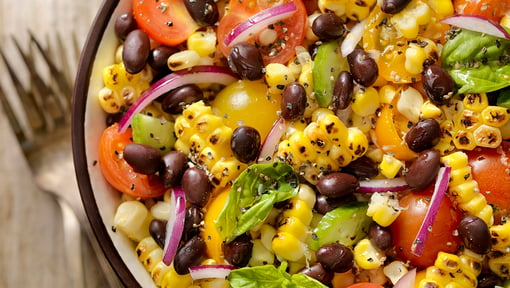
For Day 3, challenge yourself to have one meat-free meal. Even occasionally cutting back on meat can help your heart health, digestion, and the environment. It’s also a great way to explore new foods and flavors you might have been missing out on.
Build your meal around plant-based proteins like beans, lentils, tofu, or chickpeas. Don’t forget to add whole grains, plenty of veggies, and healthy fats. To make it more interesting, try using a vegetable or other ingredient you’ve never cooked with before. This could be roasted eggplant, sautéed Swiss chard, or something simple like roasted cauliflower.
The goal isn’t to cut out meat entirely. Rather, it’s to expand your food choices and discover plant-centric meals you may want to revisit.
Day 4: Sugar swap
Added sugars find their way into more foods and drinks than you may realize. Today’s challenge is all about doing what you can to try to avoid products with added sugar. This includes sweetened drinks, desserts, candy, and heavily processed snacks.
Keep in mind that this challenge isn’t about swapping sugar for artificial sweeteners. Instead, aim to reduce how much you rely on sweetness altogether. If you do find yourself craving a sweet treat, look for something more natural. Fruits like dates, berries, or apples are great options.
You may be surprised by how often sugar shows up in your usual routine. You also might be surprised by how your taste buds respond when you take a break! Some people notice that natural foods start to taste sweeter after just a day or two with less added sugar.

Day 5: Gut-friendly foods
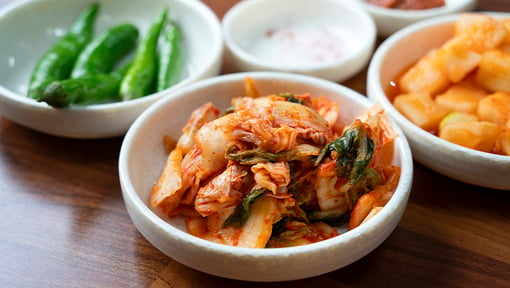
Your gut plays a major role in digestion, immunity, and overall health. Today’s focus is on adding a food rich in probiotics—beneficial bacteria that support gut health.
Options include yogurt with live cultures (such as Greek yogurt), kefir, kombucha, kimchi, sauerkraut, or miso. If you’re new to fermented foods, start with a small portion and see how your body responds.
You don’t need to overhaul your diet to support gut health. Even small additions can make a difference over time, especially when paired with fiber-rich foods like vegetables, fruits, and whole grains.
Day 6: Creative cooking
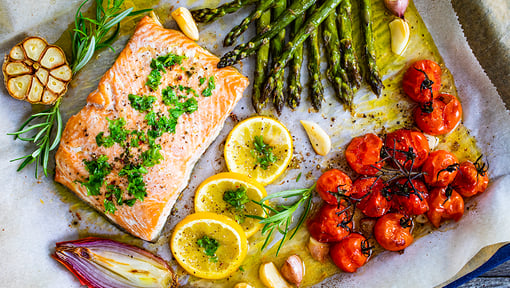
This challenge is about reconnecting with your kitchen. Try making a meal from scratch using as many whole ingredients as you can. Whole foods like vegetables, fruits, whole grains, legumes, nuts, seeds, and unprocessed proteins tend to pack in nutrients and vitamins your body needs.
This doesn’t mean you need to cook something elaborate or time-consuming. A simple stir-fry, soup, grain bowl, or roasted sheet-pan meal counts. The key is involvement: chopping, stirring, seasoning, and tasting as you go.
Cooking can be creative and grounding. It’s also a great way to get to know exactly what goes into your food. Getting creative can also help you build confidence in preparing your own meals.
Day 7: Go green
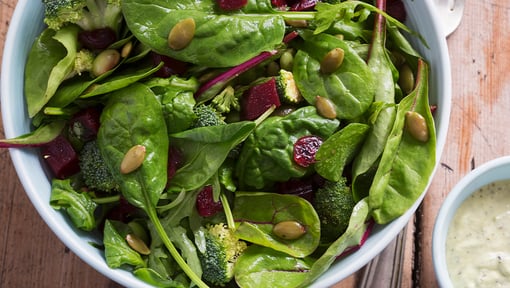
For the final day of the challenge, make it a point to eat something dark and leafy green. Spinach, kale, broccoli, collard greens, and Swiss chard are all excellent options.
These foods are nutritional powerhouses. They’re packed with vitamins, minerals, antioxidants, and fiber. They support everything from bone health to digestion and are incredibly versatile. You can add greens to salads, smoothies, soups, omelets, or sauté them as a simple side dish.
Wrapping up the week with this challenge serves as a reminder that small additions, such as a handful of greens, can have a meaningful impact on your overall nutrition.
Bringing it all together
This 7-day nutrition challenge isn’t about being perfect or following rigid rules. It’s about building awareness, trying out new healthy habits, and reminding yourself that wellness is made up of small choices done on a regular basis.
If you miss a day or adapt a challenge to fit your life, that’s okay. The real value comes from paying attention to how these changes make you feel. And then deciding which of those changes you want to carry forward.
At the end of the week, take a moment to reflect. Did one challenge feel easier to fulfill than others? Did any of them surprise you? Finally, which ones do you want to make a regular part of your life?

Thanks for reading this article!
Ready to take your next step toward an active and fit lifestyle?
The Active&Fit Direct™ program (offered through sponsoring organizations and employers) can get you moving! Learn more and check your eligibility.
If you are a Medicare, Medicaid, Medicare Advantage, or Dual Special Needs Plan (DSNP) enrollee, your health plan may provide a subsidized fitness program. Be sure to discuss program availability and eligibility requirements with your health plan.
The information in this and other Active&Fit® blog articles is not intended to take the place of regular medical care or advice. Please check with your doctor before using this information or beginning any fitness or self-care program. Images used for this article do not depict any members of the Active&Fit Direct program.
References
American Heart Association. (2024, August 2). Added sugars. https://www.heart.org/en/healthy-living/healthy-eating/eat-smart/sugar/added-sugars
Centers for Disease Control and Prevention. (2024, January 5). Get the facts: Added sugars. https://www.cdc.gov/nutrition/php/data-research/added-sugars.html
Lichtenstein, A. H., Appel, L. J., Vadiveloo, M., Hu, F. B., Kris-Etherton, P. M., Rebholz, C. M., Sacks, F. M., Thorndike, A. N., Van Horn, L., Wylie-Rosett, J., & American Heart Association Council on Lifestyle and Cardiometabolic Health, et al. (2021). 2021 dietary guidance to improve cardiovascular health: A scientific statement from the American Heart Association. Circulation. https://www.ahajournals.org/doi/pdf/10.1161/CIR.0000000000001031
Marco, M. L., Sanders, M. E., Gänzle, M., Arrieta, M.-C., Cotter, P. D., De Vuyst, L., Hill, C., Holzapfel, W., Lebeer, S., Merenstein, D., Reid, G., Wolfe, B. E., & Hutkins, R. (2021). The International Scientific Association for Probiotics and Prebiotics (ISAPP) consensus statement on fermented foods. Nature Reviews Gastroenterology & Hepatology, 18(3), 196–208. https://doi.org/10.1038/s41575-020-00390-5 [elearning.unite.it]
Masento, N. A., Golightly, M., Field, D. T., Butler, L. T., & van Reekum, C. M. (2014). Effects of hydration status on cognitive performance and mood. British Journal of Nutrition, 111(10), 1841–1852. https://doi.org/10.1017/S0007114513004455
Mills, S., Brown, H., Wrieden, W., White, M., & Adams, J. (2017). Frequency of eating home cooked meals and potential benefits for diet and health: Cross-sectional analysis of a population-based cohort study. International Journal of Behavioral Nutrition and Physical Activity, 14, Article 109. https://doi.org/10.1186/s12966-017-0567-y
National Institutes of Health, Office of Dietary Supplements. (n.d.). Probiotics: Fact sheet for health professionals. https://ods.od.nih.gov/factsheets/Probiotics-HealthProfessional/
National Institutes of Health, Office of Dietary Supplements. (n.d.). Vitamin K: Fact sheet for health professionals. https://ods.od.nih.gov/factsheets/vitaminK-HealthProfessional/
Stanford Medicine News Center. (2021, July 12). Fermented-food diet increases microbiome diversity, decreases inflammatory proteins, study finds. https://med.stanford.edu/news/all-news/2021/07/fermented-food-diet-increases-microbiome-diversity-lowers-inflammation.html
U.S. Department of Agriculture, Agricultural Research Service. (2013). Dark green leafy vegetables. https://www.ars.usda.gov/plains-area/gfnd/gfhnrc/docs/news-articles/2013/dark-green-leafy-vegetables/
Warren, J. M., Smith, N., & Ashwell, M. (2017). A structured literature review on the role of mindfulness, mindful eating and intuitive eating in changing eating behaviours: Effectiveness and associated potential mechanisms. Nutrition Research Reviews, 30(2), 272–283. https://doi.org/10.1017/S0954422417000154
Wolfson, J. A., & Bleich, S. N. (2015). Is cooking at home associated with better diet quality or weight-loss intention? Public Health Nutrition, 18(8), 1397–1406. https://doi.org/10.1017/S1368980014001943 [cambridge.org]
This article was written by Jason Nielsen, edited by Celina Johnson, and clinically reviewed by Elizabeth Thompson, MPH, RDN, on March 3, 2026.

