

Nov 23, 2026
Learn how better posture and breathing can support your mood, comfort, and overall well-being. Plus, try a 5-day challenge to help improve both.
It’s a common myth that the key to fixing bad posture is as simple as sitting up straight. Shoulders pulled back and down, spine slightly curved in all the right places. While that can stop you from slouching, it’s not a permanent solution.
Sure, correcting it in the moment can give the illusion of good posture, but it doesn’t truly make a difference if you only remember to correct it now and then, while most of your time is spent slouched.
To truly fix bad posture, you need to address the underlying issue. Most of the time, it’s caused by weak and/or tight muscles.
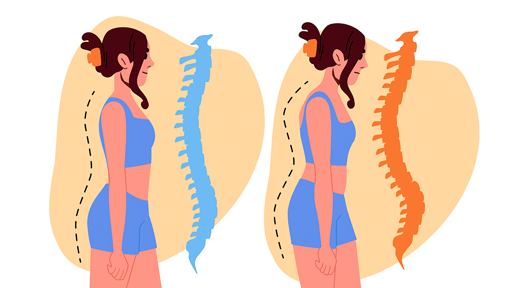
What is proper posture—and signs to look for
When certain muscles are too tight, it can affect your range of motion in that area. And weak muscles impact your ability to maintain good posture with your shoulders positioned under your ears. For example, tight muscles in your chest can pull your shoulders forward and weak upper back muscles struggle to maintain good posture.
Your spine naturally curves into a subtle “S” shape. There’s a curve in the neck, the middle of the back, and the lower back. Your posture should not change the curves of any of these 3 parts of your spine.
When you sit slouched with your back, neck, or shoulders rounded, you’re overemphasizing one or more of the curves in your spine. This slumping means your posture is off-balance and may even cause you pain.
To maintain good posture, you must protect these curves in your spine. Here’s how:
-
Keep your chin even with the floor, with your ears in line with your shoulders. Your head should not be pushed forward or tipped too far back.
-
To feel where exactly your shoulders should rest, roll them up, back, and down. This can help you find the position where your shoulders are positioned properly.
-
Your spine should be neutral. This means you should not be arching the curve in your lower back. You should not flatten this curve either. Rather, find the midway point and maintain it by bracing your abdominal muscles.
-
If you’re standing, balance evenly on both feet and keep them hip-width apart.
-
If you’re sitting, keep your feet flat on the floor. And maintain the curves in your spine.
Everyone can work to improve their posture. And now that you know what good posture looks like, you might want to know how it benefits you. There’s more to it than simply looking good.

Why is good posture important for your mood and well-being?
For starters, good posture supports balance, which is important during activity. It helps you maintain proper form and, in turn, reduces the risk of injury. Good balance is also crucial for everyday activities, such as walking, bending to pick things up, or rising from a chair.
On the other hand, poor posture can create imbalances in the body. These may be why you struggle with neck, shoulder, or back pain. When you’re in pain or discomfort, that may worsen your mood, too.
Beyond balance and pain relief, good posture may offer other benefits as well—all of which can support your overall health and mood. Good posture can:
- Support a healthier spine
- Cause less muscle fatigue
- Help build stronger core muscles
- Help you feel more confident
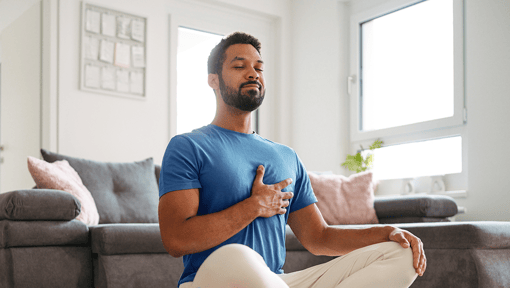
How does breathing relate to posture and mood?
Good posture has even been shown to improve your breathing. Deep breathing can foster a sense of calm and improve your mood. Breathing exercises can help you get used to the sensation of opening your chest and sitting up straight.
The link between posture and breathing makes sense. When you slouch, it limits the space your lungs can expand. This can be because the ribcage can’t fully expand, and the diaphragm can’t function properly. This, in turn, reduces your lung capacity.
The good news is that flexibility and strengthening exercises, and deep breathing, can make a difference. Practicing slow, controlled breathing can help retrain you to breathe correctly.
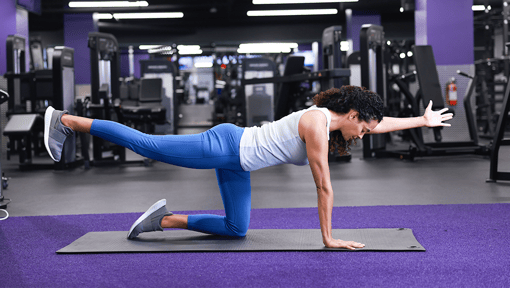
How can you improve your mood and posture? Try this 5-day challenge
Start by being mindful of your posture throughout the day. It might even help to set reminders on your phone to check in with yourself about your posture. If you spend a lot of time sitting—whether you’re working or lounging at home—it’s important to sit in good posture and take breaks throughout the day. Be sure to:
- Take brief walks
- Get up and move
- Avoid crossing your legs
- Support your back
Notice how much better you feel after these short breaks—both mentally and physically.
In addition to being more mindful of your body, it helps to practice strength training and deep-breathing exercises. You can follow along with these 30-minute exercises for this 5-day challenge:
To support and protect your spine, it’s important to strengthen your core. This workout focuses on building your core strength, which can help support better posture.
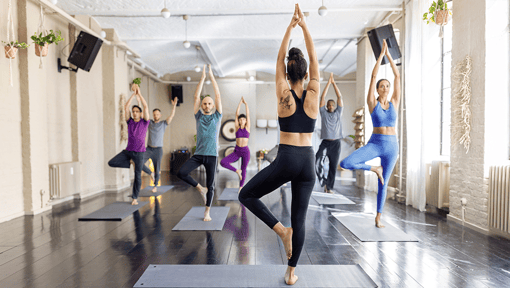
Deep breathing helps relax your body and mind. This yoga flow will slowly move you through each posture, helping you raise your body awareness to support good posture.
This yoga workout features core-focused exercises and deep breathing. It includes controlled movements to calm your mind and enhance body awareness, which can help improve your posture.
Exercises that emphasize posture can also help. This strength-training session includes a series of postural exercises to boost your strength and body awareness.
This full-body Pilates workout includes a series of exercises to help build core strength, flexibility, and balance—all of which are important for supporting good posture.
Final thoughts
This 5-day challenge is a great step toward improving your health and well-being. With exercises that focus on dynamic posture, muscle strength, flexibility, body awareness, and breathing, you’ll improve your posture and feel better, too.
So, give it a try. Stay mindful of your posture and any tense muscles throughout the day. When you learn to take breaks and practice deep breathing, you’ll notice your mood improves. And when you consistently correct your posture and add targeted exercises to your daily routine, you’ll notice your posture improves, too. Over time, you may find that good posture feels most natural.
Thanks for reading this article!
Ready to take your next step toward an active and fit lifestyle?
The Active&Fit Direct™ program (offered through sponsoring organizations and employers) can get you moving! Learn more and check your eligibility.
If you are a Medicare, Medicaid, Medicare Advantage, or Dual Special Needs Plan (DSNP) enrollee, your health plan may provide a subsidized fitness program. Be sure to discuss program availability and eligibility requirements with your health plan.
The information in this and other Active&Fit® blog articles is not intended to take the place of regular medical care or advice. Please check with your doctor before using this information or beginning any fitness or self-care program. Images used for this article do not depict any members of the Active&Fit Direct program.
References
Albarrati, A., Zafar, H., Alghadir, A. H., & Anwer, S. (2018). Effect of upright and slouched sitting postures on the respiratory muscle strength in healthy young males. BioMed Research International, Article 3058970. https://doi.org/10.1155/2018/3058970
Cleveland Clinic. (2023, October 18). Posture. https://my.clevelandclinic.org/health/articles/posture
Dum, R. P., Levinthal, D. J., & Strick, P. L. (2016). Motor, cognitive, and affective areas of the cerebral cortex influence the adrenal medulla. Proceedings of the National Academy of Sciences of the United States of America, 113(35), 9922–9927. https://doi.org/10.1073/pnas.1605044113
Harvard Health Publishing, Harvard Medical School. (2017, January 24). Why good posture matters. Harvard Health. https://www.health.harvard.edu/healthy-aging-and-longevity/why-good-posture-matters
Kovar, E. (2015, November 2). How posture affects breathing. American Council on Exercise. https://www.acefitness.org/resources/everyone/blog/5716/how-posture-affects-breathing/?srsltid=AU7gw4V3cRS86RqownKVN5p-XLaUBBkmzQbH6mLjOHN8YespLpxiCMtG
Mayo Clinic. (2023, November 18). Stress management: Stress relief. https://www.mayoclinic.org/healthy-lifestyle/stress-management/basics/stress-relief/hlv-20049495
Mayo Clinic Health System. (2020, July 17). Proper posture is important for good health. https://www.mayoclinichealthsystem.org/hometown-health/speaking-of-health/proper-posture-is-important-for-good-health
MedlinePlus. (2025, September 8). Guide to good posture. U.S. National Library of Medicine. https://medlineplus.gov/guidetogoodposture.html
National Heart, Lung, and Blood Institute. (2025, June 27). What breathing does for the body. National Institutes of Health. https://www.nhlbi.nih.gov/health/lungs/breathing-benefits
ScienceInsights.org. (2026, May 1). Why is good posture important for your health? https://scienceinsights.org/why-is-good-posture-important-for-your-health/
UCLA Health. (2024, June 6). Why good posture matters. https://www.uclahealth.org/news/article/why-good-posture-matters
Zomorodi, M., Monteleone, K., White, R. F., & Meshkinpour, S. (2023, October 24). Stressed out? It might not just be in your head. How your muscles affect your mood. NPR. https://www.npr.org/2023/10/24/1200611637/how-posture-and-movement-impact-our-mood
This article was written by Stephanie Ruiz, edited by Jason Nielsen, and clinically reviewed by Jaynie Bjornaraa, PhD, MPH, PT, LAT, ATC, CSCS, CSPS, on September 1, 2026.

