

Sep 28, 2026
Working out with your kids builds strong bonds and healthy habits. Make family fitness a part of your routine with these fun, simple ideas for all ages.
When you’re a parent, finding the time to work out can be tough. Between cooking, cleaning, playdates, after-school clubs or sports, and work, exercise can feel like a luxury you don’t have time for—even if you want to stay active.
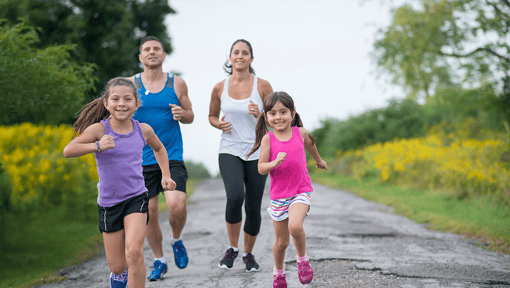
But what if you rethink exercise? Don’t look at it as one more item on the to-do list. Instead, imagine how you can turn exercise into family time by working out with your kids. Family fitness can take any number of forms, from fun activities to formal workout plans. Throw a Frisbee in the backyard. Toss on a family-friendly workout video. Train for a 5K together.
When you get the whole family involved, you set your kids up for a healthy future. Exercise becomes a regular part of their routine and helps build healthy habits that can last as they grow. Studies have shown that kids who exercise tend to make other healthy choices. Plus, you’ll bond as a family while boosting your mood, focus, and physical health.
How family fitness benefits the whole family
Getting more physical activity is one of the best things you can do for your health. This is true for both kids and adults because exercise has a positive impact on so many other healthy lifestyle factors. For instance, exercising boosts your mental health and helps you sleep better. When you’re clear-headed and well-rested, you’re less likely to seek out sugary or fatty foods for a quick energy boost.
The more physically active you are, the easier it becomes to make other healthy choices. Some studies have shown that kids who get more exercise are less likely to pick up unhealthy behaviors, like smoking.
Physical activity has a lot of direct benefits, too. For kids and adults, it:
- Strengthens bones
- Builds muscle
- Keeps the heart and brain healthy
- Lowers the risk of diseases, like type 2 diabetes
- Helps keep blood pressure at healthy levels
- Helps maintain a healthy weight
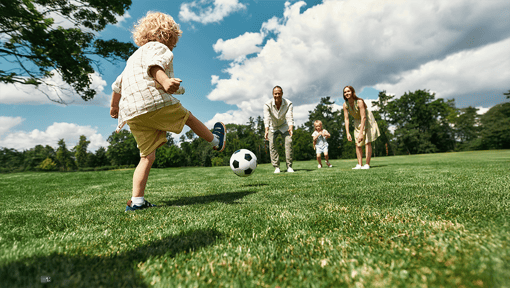
This can translate to healthy kids who can focus better in school. And when parents model an active lifestyle, movement stops being a chore. Instead, it becomes a normal and fun part of daily life. Picture the joy of sharing a laugh while kicking a soccer ball or celebrating each other's wins during workouts. These moments of shared movement create opportunities to talk, cooperate, and build confidence and connection.
How much exercise do kids need?
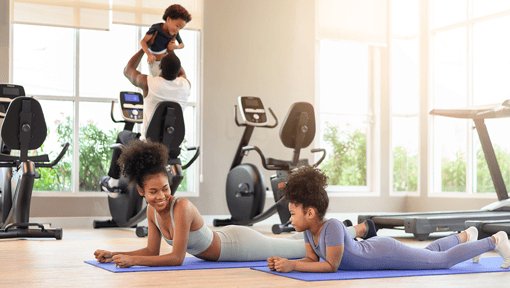
Kids don’t need a structured workout, but it’s important for them to stay active every day. Here are the activity guidelines for each age group:
- 5 and younger: Active play throughout the day
- 6 to 17: 60 minutes per day
- 18 and older: 150 minutes per week (e.g., 30 minutes per day)
Keep in mind that this exercise doesn’t have to happen all at once (even for adults). Gym class, recess games, and sports all count toward kids’ daily activity goals. So does walking, dancing, swimming, biking, and simple strength moves. Start small and build up until fitness is a daily habit.

Family workout ideas by age
A family workout can be a fun way to make memories and teach your kids about fitness. No matter their age—baby, toddler, school-aged, or teen—there are activities that you all can join in on. Here are some age-specific ideas for moving together as a family:
Babies
While babies may not be exercising just yet, they can benefit from watching you. Take them on a walk in a stroller or carrier. Or let them watch you work out at home. As you exercise, count out loud and narrate what you're doing—listening to your voice is great for their development. And watching you exercise will encourage them to pick up that healthy habit as they grow.
Toddlers
For toddlers, exercise is play. Make it a game with fun, simple moves. Do jumping jacks while singing the ABCs. Run, hop, or skip to a goal line, like a tree or the couch. Try animal moves like crab walks, bunny hops, and frog jumps. If your kid turns down these options, you can try incorporating them into your workout by having them mimic some of your moves.
School-aged
At this age, exercise can get a bit more challenging as kids become more coordinated—but it should still be playful. Keep it fun while you start adding structured movements. Try 10 reps of a few basic exercises, like jumping jacks, modified push-ups, walking lunges, and squats. You can also continue to gamify movement. Create your own obstacle course. Grab some chalk and draw hopscotch squares. Create a nature scavenger hunt and see how many items you can spot on a family nature hike.
Teens
Teens are ready to level up their workouts, so you can do nearly any type of fitness training with them. Just be sure to start with beginner workouts and progress slowly. Sign up for a 5K (or a mud run) and train together. Take a yoga class. Do weekly strength training sessions and add partner moves.
If your teen is new to strength training , start with beginner-friendly bodyweight moves and focus on good form. Try alternating squats (you do a squat, then your teen does) or partner push-ups (face each other and high-five at the top). If your teen is in sports, you can practice together.
Make family fitness a part of everyday life
Working out with kids doesn’t have to be complicated. Just keep moving together. Even if you only have 10 minutes to be active, that’s 10 minutes of together time. Moving as a family helps you care for your own health while setting a positive example for your kids.
Remember, fitness should be fun and feel good for the whole family. While some kids may need extra encouragement, don’t force exercise. Instead, let them help choose what activities you do together. This will foster a positive attitude toward staying active.
If any family member has an injury or health condition, talk with a doctor about which exercises are safe. Be sure to drink plenty of water and take breaks when needed. And take rest days, too.
Start with one simple activity this week—a family walk, a dance party, a game in the yard, or an outdoor workout to enjoy the cooler fall weather. Keep it fun, flexible, and low pressure. Then build from there and watch your connections deepen and your health flourish!
Thanks for reading this article!
Ready to take your next step toward an active and fit lifestyle?
The Active&Fit Direct™ program (offered through sponsoring organizations and employers) can get you moving! Learn more and check your eligibility.
If you are a Medicare, Medicaid, Medicare Advantage, or Dual Special Needs Plan (DSNP) enrollee, your health plan may provide a subsidized fitness program. Be sure to discuss program availability and eligibility requirements with your health plan.
The information in this and other Active&Fit® blog articles is not intended to take the place of regular medical care or advice. Please check with your doctor before using this information or beginning any fitness or self-care program. Images used for this article do not depict any members of the Active&Fit Direct program.
References
Agbaje A. O. (2025). Accelerometer-based sedentary time and physical activity with incident and progressive tobacco smoking in 2503 children: A 13-year mediation and temporal longitudinal study. Behaviour Research And Therapy, 185, Article 104674. https://doi.org/10.1016/j.brat.2024.104674
Centers for Disease Control and Prevention. (2024,January 8). What counts for children and teens. https://www.cdc.gov/physical-activity-basics/adding-children-adolescents/what-counts.html
Centers for Disease Control and Prevention. (2025, December 4). Benefits of physical activity. https://www.cdc.gov/physical-activity-basics/benefits/index.html
Centers for Disease Control and Prevention. (2026, March 10). Health benefits of physical activity for children. https://www.cdc.gov/physical-activity-basics/health-benefits/children.html
Cleveland Clinic. (2026, January 8). Exercise for kids: Age-appropriate activities to keep them moving. https://health.clevelandclinic.org/exercise-for-kids
Mayo Clinic. (2023, December 15). Strength training: OK for kids? https://www.mayoclinic.org/healthy-lifestyle/tween-and-teen-health/in-depth/strength-training/art-20047758
McGill, N. (2016, July). Exercising with your kids creates long-lasting health. The Nation's Health, 46(5), 32. https://www.thenationshealth.org/content/46/5/32
Tian, F., & Liu, F. (2025). Physical activity and risk behaviors among adolescents: The mediating roles of diet, sleep, mental health, and substance use. Frontiers in Public Health, 13, Article 1665023. https://doi.org/10.3389/fpubh.2025.1665023
This article was written by Keleigh Somes, edited by Jason Nielsen, and clinically reviewed by Jaynie Bjornaraa, PhD, MPH, PT, LAT, ATC, CSCS, CSPS, on July 5, 2026.

