

Jan 5, 2026
When it comes to health, fitness might be more important than weight loss. In fact, making fitness a priority could be the key to a longer, healthier life.
The conversation around weight is shifting. While the spotlight may still be on weight loss, research is shedding more light on the health benefits of fitness. Studies have shown that, regardless of weight, improving your physical fitness has health benefits similar to those of weight loss.
That doesn’t mean losing weight is pointless. Reaching a healthy weight does improve your health. But what it does mean is that thin doesn’t always equal healthy, and extra pounds don’t always equal unhealthy. Your fitness level may have a much bigger impact on your health than the number on the scale.

Weight loss vs. fitness
The research around weight loss is clear: Losing extra weight can lower your risk of serious health conditions. But losing weight, although not impossible, can be hard. And keeping it off can be even harder. Fortunately, weight loss isn’t the only path to better health. Exercise can also lower your risk of serious health conditions.
By focusing on fitness instead of weight loss, you can:
- Avoid weight cycling: When you’re focused solely on weight loss, you may end up in a cycle of losing and regaining weight. Not only is this frustrating, but it can also harm your health. Weight cycling has some of the same health risks as obesity. It’s also linked to higher cholesterol and blood sugar levels.
- Improve your health at any weight: Research shows that being physically fit lowers your risk of chronic health conditions. This is true even for people carrying extra weight. In fact, one study found that the risk of death for a fit person with obesity was half that of an unfit person at a normal weight. This means that exercise may provide heart-health benefits that are not tied to weight loss.
 Benefits of fitness
From a better mood to a longer life, getting fit boosts your health and wellness in a number of ways. Many of these benefits overlap with those of weight loss. For instance, exercise helps lower your risk of serious health conditions, including:
- Cancer
- Heart disease
- Type 2 diabetes
- High blood pressure
- Stroke
Exercise also plays a powerful role in supporting your mental health. Moving your body releases endorphins, the brain's feel-good chemicals. This helps boost your mood and ease stress. Even a short walk can help calm your mind and release anxious energy. Research has also shown that exercise can help ward off or improve symptoms of depression and anxiety.
Plus, exercise is a key tool for managing your weight. So, although your focus is on fitness, you may lose weight anyway. Exercise burns calories and builds muscle—and more muscle means your body burns more calories, even at rest.
But that’s not the only way exercise helps manage weight. It can also improve your sleep and boost your energy levels. These benefits are great on their own, but they also make it easier to stay active and make healthier choices. You might notice fewer food cravings and more motivation to move your body. Unlike the ups and downs of dieting, this kind of gradual, fitness-focused lifestyle shift is more likely to stick. And even if the scale doesn’t budge, you’re still gaining all the health benefits that come with being physically fit.
That’s why fitness matters, regardless of weight loss. The long-term health benefits of staying active can add years to your life. In fact, research suggests that being fit may be even more important for longevity than losing weight alone.
Getting started
Before starting or changing your exercise routine, talk with your doctor, especially if you have any chronic health conditions or injuries. They can help tailor an exercise routine that’s safe for you.
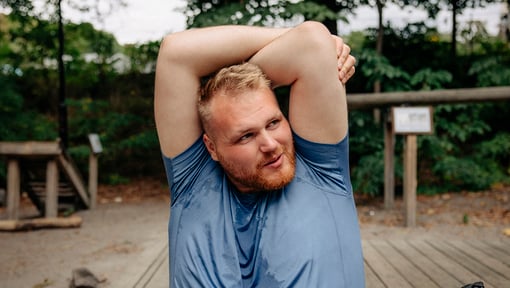
Then, to reap the health benefits of fitness, get—or work up to—at least 150 minutes of moderate-intensity physical activity each week. That can be as simple as brisk walking for 30 minutes, 5 days per week. Walking is a great place to start if you’re new to exercise or if it’s been a while since you’ve worked out. Plus, you can start small. Walk for 5 minutes the first week or two. Then work up to 10 minutes. Gradually add more time to your walks, 5 minutes at a time, until you’re walking 30 minutes each time, 5 days per week.
If you’re already quite fit, you can aim for 75 minutes of vigorous-intensity activity per week. Running, swimming, spin classes, and high-intensity interval training (HIIT) can do the trick. Or do a mix of both intensities—the rule of thumb is that one minute of vigorous activity equals two minutes of moderate. Just choose an activity that suits your fitness level and get your heart rate up, whether that’s a little or a lot.
Strength training is also vital. Include at least 2 days of it per week. This can count toward your weekly physical activity as long as you’re working out at the right intensity. Circuit training is one way to do this. It gets your heart pumping as you move through your exercises with little to no rest between. Do, however, rest between circuits for about one minute. Complete 2 to 3 circuits. Choose a mix of weightlifting or bodyweight exercises that will target all the major muscle groups.
Need some workout inspiration? Check out these 3 fitness challenges to reignite your workout routine.
Improving your fitness can lead to better health and a longer life, even if you don’t lose weight. So instead of fixating on numbers, shift your focus to how your fitness routine makes you feel. Celebrate the small victories, like better sleep, less stress, or lower cholesterol levels. These markers of progress can be mighty motivators on your path to better health.
Thanks for reading this article!
Ready to take your next step toward an active and fit lifestyle?
The Active&Fit Direct™ program (offered through sponsoring organizations and employers) can get you moving! Learn more and check your eligibility.
If you are a Medicare, Medicaid, Medicare Advantage, or Dual Special Needs Plan (DSNP) enrollee, your health plan may provide a subsidized fitness program. Be sure to discuss program availability and eligibility requirements with your health plan.
The information in this and other Active&Fit® blog articles is not intended to take the place of regular medical care or advice. Please check with your doctor before using this information or beginning any fitness or self-care program. Images used for this article do not depict any members of the Active&Fit Direct program.
References
Barry, V. W., Baruth, M., Beets, M. W., Durstine, J. L., Liu, J., & Blair, S. N. (2014). Fitness vs. fatness on all-cause mortality: A meta-analysis. Progress in Cardiovascular Diseases, 56(4), 382-390. https://doi.org/10.1016/j.pcad.2013.09.002
Barry, V. W., Caputo, J. L., & Kang, M. (2018). The joint association of fitness and fatness on cardiovascular disease mortality: A meta-analysis. Progress in Cardiovascular Diseases, 61(2), 136-141. https://doi.org/10.1016/j.pcad.2018.07.004
Breen, A. (2024, November 13). Why weight? Researchers say it’s fitness that matters. University of Virginia, School of Education and Human Development. https://education.virginia.edu/news-stories/why-weight-researchers-say-its-fitness-matters
Cave, K. (n.d.). Circuit training workouts - Everything you need to know. NASM. https://blog.nasm.org/circuit-training-everything-you-need-to-know
Centers for Disease Control and Prevention. (2023, December 20). Adult activity: An overview. https://www.cdc.gov/physical-activity-basics/guidelines/adults.html
Folk, M. & Mazzo, L. (2022, September 26). What is circuit training? (Shape). ACE In the News. https://www.acefitness.org/about-ace/press-room/in-the-news/in-the-news/
Gaesser, G. A., & Angadi, S. S. (2021). Obesity treatment: Weight loss versus increasing fitness and physical activity for reducing health risks. iScience, 24(10), 102995. https://doi.org/10.1016/j.isci.2021.102995
Kakinami, L., Knauper, B., & Brunet, J. (2020). Weight cycling is associated with adverse cardiometabolic markers in a cross-sectional representative US sample. Journal of Epidemiology and Community Health, 74(8), 662-667. https://doi.org/10.1136/jech-2019-213419
Kovar, E. (2016, March 26). A basic high-intensity interval training routine for beginning exercisers. ACE. https://www.acefitness.org/resources/pros/expert-articles/5880/a-basic-high-intensity-interval-training-routine-for-beginning-exercisers/
Mayo Clinic. (2023, August 26). Exercise: 7 benefits of regular physical activity. https://www.mayoclinic.org/healthy-lifestyle/fitness/in-depth/exercise/art-20048389
MedlinePlus. (2025, September 15). Exercise and physical fitness. U.S. Department of Health and Human Services, National Institutes of Health, National Library of Medicine. https://medlineplus.gov/exerciseandphysicalfitness.html
Niemiro, G. M., Rewane, A., & Algotar, A. M. (2023). Exercise and fitness effect on obesity. StatPearls Publishing. https://www.ncbi.nlm.nih.gov/books/NBK539893/
Pinckard, K., Baskin, K. K., & Stanford, K. I. (2019). Effects of exercise to improve cardiovascular health. Frontiers in Cardiovascular Medicine, 6, 69. https://doi.org/10.3389/fcvm.2019.00069
Weeldreyer, N. R., De Guzman, J. C., Paterson, C., Allen, J. D., Gaesser, G. A., & Angadi, S. S. (2025). Cardiorespiratory fitness, body mass index and mortality: A systematic review and meta-analysis. British Journal of Sports Medicine, 59(5), 339–346. https://doi.org/10.1136/bjsports-2024-108748
This article was written by Keleigh Somes, edited by Gail Olson, and clinically reviewed by Jaynie Bjornaraa, PhD, MPH, PT, LAT, ATC, CSCS, CSPS, on October 26, 2025.

