

Mar 30, 2026
You may not hear about low-intensity steady-state cardio workouts (LISS) as often as their higher-intensity counterpart, HIIT, but they are actually a more common cardio workout than you may realize.
A good cardio workout often conjures images of sweat-drenched participants gasping for air. Grueling spin classes or high-intensity interval workouts (HIIT) might come to mind. And while these sorts of workouts are effective (and popular!), they aren’t for everyone. Nor should they be done on consecutive days. Your body needs time to recover. Whether you enjoy HIIT or it isn’t for you, you may want to weave LISS into your workout routine, as well.
LISS is a less intense, yet still effective cardio workout. Where HIIT tends to be made up of explosive bursts of activity, LISS is more of a steady, sustained effort. You’re likely already doing LISS workouts, at least some of the time. For example, anytime you walk briskly, run, swim, or bike at a steady pace—you’re doing LISS. Let’s take a deeper look at LISS and the many health and fitness benefits it offers.
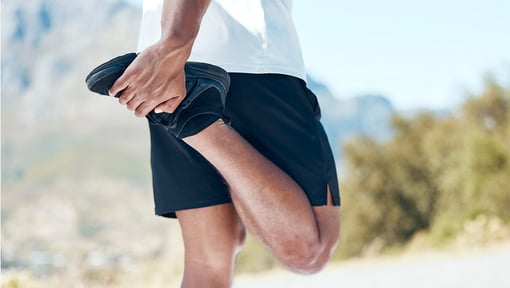
What is LISS cardio?
Low-intensity steady-state cardio is a type of aerobic exercise performed at a consistent, moderate pace for an extended period of time—somewhere between 30 to 60 minutes. Unlike HIIT, which alternates between bursts of high effort and lower-effort recovery, the goal of LISS is to maintain a less-intense level of effort (and therefore a lower heart rate) for longer periods of time. It is considered moderate intensity exercise.
Examples of LISS workouts include:
-
- Brisk walking outdoors or on a treadmill
- Cycling on flat terrain at 12-14 mph
- Swimming laps at a comfortable pace
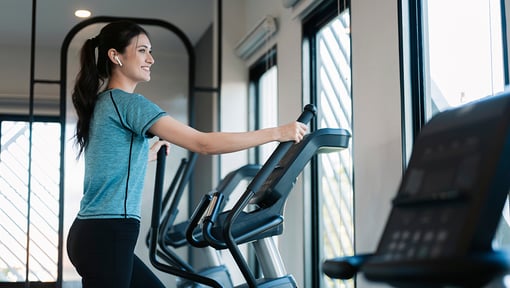
- Elliptical training with light to moderate resistance
- Hiking on mostly flat trails
What defines LISS most is its sustainability. In other words, you should be able to carry on (or “sustain”) a conversation without struggling for air. (As opposed to HIIT workouts, when that’s not usually possible.)
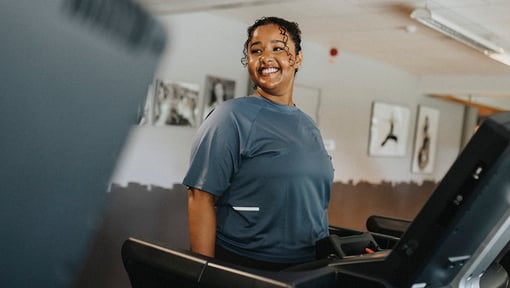
The science behind LISS
When you exercise at a lower intensity, your body primarily uses oxygen to convert fat into fuel. This makes LISS particularly effective for:
-
- Fat metabolism: Encouraging the body to burn fat as a main energy source.
- Cardiovascular endurance: Strengthening the heart and lungs gradually.
- Recovery support: Promoting blood flow without putting too much strain on your muscles.
Doing this sort of cardio helps you build a strong fitness foundation. Elite athletes often rely on steady-state cardio as a base before layering in higher-intensity training. For everyday exercisers, it’s a way to improve health with less risk of burnout or injury. 
6 other benefits of LISS cardio
LISS cardio focuses on consistency more than intensity. Here’s why this type of cardio might be what you’re looking for.
-
- Suitable for all fitness levels. LISS is beginner-friendly. You don’t need advanced skills, expensive equipment, or peak conditioning to start. A simple walk around your neighborhood qualifies.
- Lower risk of injury. Because it’s lower intensity, LISS puts less stress on joints, muscles, and connective tissue compared to high-impact workouts. This makes it ideal for older adults, people recovering from injuries, or those with chronic conditions.
- Mental health boost. LISS cardio can be meditative. The rhythmic movement in fresh air or calming environments may help ease stress and anxiety. Many people find LISS a natural mood enhancer.
- Sustainable fat loss. While HIIT burns calories quickly, LISS encourages fat oxidation over longer periods. When combined with a balanced diet, it can help support gradual, steady weight loss.
- Active recovery. Athletes often use LISS on off-training days to reduce soreness and maintain activity without overloading their bodies.
- Long-term consistency. Because LISS exercises tend to be less strenuous, you might find it easier to stick with it. This kind of consistency is the cornerstone of fitness.
- Suitable for all fitness levels. LISS is beginner-friendly. You don’t need advanced skills, expensive equipment, or peak conditioning to start. A simple walk around your neighborhood qualifies.
Putting together a LISS workout
Think of a LISS workout like any other. Here’s a simple framework to keep in mind to get you started:
- Warm-up. Begin each workout with 5-10 minutes of low-intensity movement. This helps prepare your muscles and joints for exercise.
- Start your steady-state workout. A typical LISS workout usually lasts 30−60 minutes. Maintain a steady pace (hence the name!). Your breathing should be harder than usual, but not to the point of gasping for air. (You should still be able to talk easily.) Aim for a heart rate of 50-70 percent of your maximum.
- Beginners. Aim for 2 to 3 sessions per week.
- Intermediate/advanced. Depending on your goals, aim for 3−5 sessions, or 150 minutes, of moderate-intensity exercise, per week. (According to the current Physical Activity Guidelines for Americans, adults should aim for at least 150 minutes of moderate-intensity physical activity per week.)
- Beginners. Aim for 2 to 3 sessions per week.
- Cooldown. When finished, take another 5−10 minutes to cool down with easier movements, to properly stretch, and to gradually lower your heart rate back to normal.
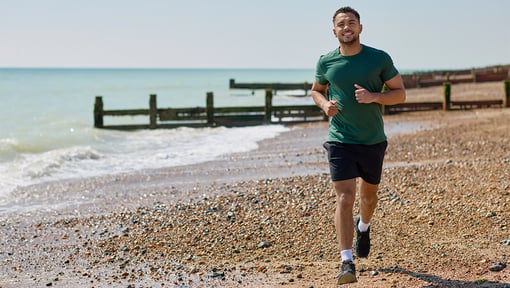
Tips for success
Keep these tips in mind to help ensure you can make LISS a sustainable workout routine that you’ll want to keep coming back to.
-
- Choose enjoyable activities. If you enjoy the treadmill, you can easily make that happen. But if not, opt for a scenic outdoor route for a walk or bike ride. Swimming is another favorite LISS activity.
- Mix it up. You don’t have to do the same routine day in and day out. If the weather’s not so great, find indoor options. A nice warm day out? Take your routine outside for the day! The key is to find ways to alternate your workouts, so you don’t become bored.
- Drink water. Yes, the intensity may be lower, but your need to hydrate is still crucial. Your body always needs fluids, especially during and after exercise.
- Add strength training. Paired with LISS workouts, strength training helps create a balanced fitness plan.
- Track your heart rate. A fitness watch can help ensure you’re keeping your heart rate in the right zone, (about 50−70 percent of your max heart rate).

- Choose enjoyable activities. If you enjoy the treadmill, you can easily make that happen. But if not, opt for a scenic outdoor route for a walk or bike ride. Swimming is another favorite LISS activity.
LISS vs. HIIT
You might read a lot of chatter about how these 2 types of training are different. After all, one workout is “low” intensity and the other is “high” intensity. But while these workouts serve different purposes, both can play important roles in your fitness journey. A balanced fitness program can benefit from including both types of workouts.
Some may say that LISS workouts aren’t intense enough--that they’re “too easy” to be effective. Or you may think that you won’t burn enough calories. The truth is, intensity alone isn’t the only factor. Finding an exercise routine that you enjoy and can stick to is such a big part of staying in shape. And while you won’t burn as many calories per minute as you would with a HIIT workout, the longer duration may help even it out.
Bottom line, a low-intensity workout may not be flashy, but it is effective. It builds endurance and burns fat. It’s a great mood booster. And it’s a workout that just about anybody can do, no matter your age or ability. So, whether you’re a seasoned athlete or someone who’s just starting out, give LISS a shot.

Thanks for reading this article!
Ready to take your next step toward an active and fit lifestyle?
The Active&Fit Direct™ program (offered through sponsoring organizations and employers) can get you moving! Learn more and check your eligibility.
If you are a Medicare, Medicaid, Medicare Advantage, or Dual Special Needs Plan (DSNP) enrollee, your health plan may provide a subsidized fitness program. Be sure to discuss program availability and eligibility requirements with your health plan.
The information in this and other Active&Fit® blog articles is not intended to take the place of regular medical care or advice. Please check with your doctor before using this information or beginning any fitness or self-care program. Images used for this article do not depict any members of the Active&Fit Direct program.
References
American Heart Association. (2024, August 12). Target heart rates chart. https://www.heart.org/en/healthy-living/fitness/fitness-basics/target-heart-rates
Foster, C., Farland, C. V., Guidotti, F., Harbin, M., Roberts, B., Schuette, J., Tuuri, A., Doberstein, S. T., & Porcari, J. P. (2015). The effects of high intensity interval training vs steady state training on aerobic and anaerobic capacity. Journal of Sports Science & Medicine, 14(4), 747–755. https://www.jssm.org/volume14/iss4/cap/jssm-14-747.pdf
Gay, C., Chabaud, A., Guilley, E., & Coudeyre, E. (2016). Educating patients about the benefits of physical activity and exercise for their hip and knee osteoarthritis: Systematic literature review. Annals of Physical and Rehabilitation Medicine, 59(3), 174–183. https://doi.org/10.1016/j.rehab.2016.02.005
Keating, S. E., Machan, E. A., O’Connor, H. T., Gerofi, J. A., Sainsbury, A., Caterson, I. D., & Johnson, N. A. (2014). Continuous exercise but not high intensity interval training improves fat distribution in overweight adults. Journal of Obesity, 2014, Article ID 834865. https://doi.org/10.1155/2014/834865
Lee, D., Son, J. Y., Ju, H. M., Won, J. H., Park, S. B., & Yang, W. H. (2021). Effects of individualized low-intensity exercise and its duration on recovery ability in adults. Healthcare (Basel, Switzerland), 9(3), 249. https://doi.org/10.3390/healthcare9030249
McCall, P. (2015, July 30). HIIT vs. steady state cardio: which one is best for your clients? American Council on Exercise. https://www.acefitness.org/resources/pros/expert-articles/5563/steady-state-vs-interval-training-which-one-is-best-for-your-clients/
McDowell, K. (2023). Low-intensity steady-state cardio. Personal Training Quarterly, 10(2). National Strength and Conditioning Association. https://www.nsca.com/education/articles/ptq/low-intensity-steady-state-cardio/
Singh, D., Nigam, A. K., & Badhe, V. (2023). Pace of walking with relation of energy of outflow: A review. International Journal of Creative Research Thoughts (IJCRT), 11(7), 653–660. https://ijcrt.org/papers/IJCRT2307653.pdf
Ungvari, Z., Fazekas-Pongor, V., Csiszar, A., & Kunutsor, S. K. (2023). The multifaceted benefits of walking for healthy aging: From Blue Zones to molecular mechanisms. GeroScience, 45(6), 3211–3239. https://doi.org/10.1007/s11357-023-00873-8
Zak, L. (2017, March 1). LISS vs. HIIT training sessions – Can both lead to weight loss? BMEG442: Engineering Exercise and Sports, University of Delaware. https://sites.udel.edu/coe-engex/2017/03/01/liss-vs-hiit-training-sessions-can-both-lead-to-weight-loss/
This article was written by Jason Nielsen, edited by Gail Olson, and clinically reviewed by Jaynie Bjornaraa, PhD, MPH, PT, LAT, ATC, CSCS, on December 29, 2025.

