

Oct 12, 2026
Adults begin to lose muscle mass in their 30s, and it speeds up with age. Learn why it’s critical to strength train—especially as you hit your 40s.
Strength training is important at every stage of adulthood, but it’s not uncommon for it to take a back seat at some point during midlife. Life gets busy with work, family responsibilities, or just the endless list of daily tasks that come with adulthood. Cardio often feels easier to fit into a packed schedule, while strength training often gets pushed to the side.
However, maintaining a strength-training routine, especially at 40 and beyond, is more important than you may realize. And it is more helpful to start even earlier. Muscle plays a key role in how well you move, feel, and function as you age. It supports your metabolism, helps protect your joints, improves balance, and allows you to comfortably enjoy the activities you love.
While some age-related muscle loss is natural, it’s not inevitable. The choices you make now can help preserve your strength, independence, and quality of life for decades to come. A regular strength training routine and a healthy lifestyle can get you on your way.
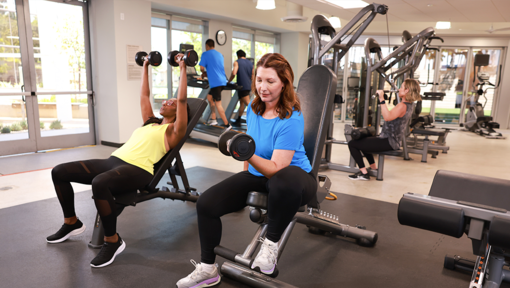
Age-related muscle loss begins earlier than you may think
For most adults, muscle mass naturally begins to decline around age 30 to 35. While this decline is gradual, it becomes more noticeable as the years go on.
You may not notice the changes right away. But around age 40, it may start to creep in a little more quickly if you don’t actively strength train. You may notice your muscles getting weaker. Some everyday movements may need a little more effort than they once did.
This is why muscle deserves even more attention after 40. But building and maintaining it before that age, as well as after, can also help offset some of these natural effects of aging and preserve your health and independence later in life.
Muscle supports everyday function and independence
When some people think of muscle, they picture athletic performance or appearance. But muscle's most important job may be helping you navigate daily life.
Strong muscles make it easier to carry groceries, climb stairs, get up from a chair, lift luggage, play with your children or grandchildren, and do countless other everyday tasks. Muscle also helps you maintain mobility and independence as you age.
Without enough muscle, these simple activities may become a bit harder. Over time, this can start to erode your confidence. You may begin to limit activities you once did without thinking twice. And you may need to rely on others for help more often. Maintaining muscle is so much more than just looking fit. It's also about staying functional and independent.
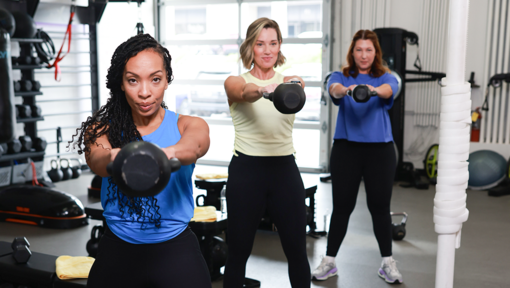
Muscle helps keep your metabolism strong
Muscle is often overlooked for its role in metabolism. Muscle tissue requires energy to maintain itself. People with more muscle generally burn more calories throughout the day, even while resting. As muscle mass declines, your metabolism also tends to slow down.
A slower metabolism can make it harder to maintain a healthy weight. Over time, this can lead to higher amounts of body fat and weight gain.
Strength training helps counter this. By maintaining or adding muscle mass, you can help support a healthier metabolism. Muscle also plays an important role in blood sugar regulation. Muscle tissue helps remove sugar from the bloodstream and supports insulin sensitivity . Together, these two factors help contribute to long-term metabolic health.
Improving your metabolic health can lower the risk of a number of health issues, including:
- Type 2 diabetes
- Heart disease
- Stroke
- Fatty liver disease.
- High blood pressure
- Obesity and frailty
Considering all these benefits, healthy muscle works like a protective organ that helps prevent disease and benefits nearly every system in the body.
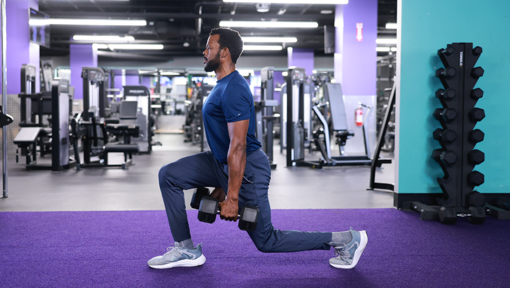
Muscle protects and supports your joints
Some people may avoid strength training out of worry that it might harm their joints. In reality, when done properly, strength training does the opposite.
Muscles act as natural support systems for your joints. Strong muscles help stabilize the knees, hips, shoulders, and spine. This reduces stress on the structures around them. The added support can improve how well you move and may even help reduce everyday aches and pains.
When muscles are weak, the joints often absorb more force than they are meant to handle. Over time, that can add discomfort, damage joints, and thus limit movement.
Building up strength through every stage of adulthood helps create a stronger foundation for your entire body.
Strong muscles improve balance and reduce fall risk
Balance depends on more than just coordination. Strength plays a big role, too.
As muscle loss progresses, balance and stability tend to take a hit as well. This can add to the risk of falls and injuries, which become far more serious with age.
Strength training improves muscle strength, function, reaction times, and body control. Together, those improvements can make it easier to regain your balance after a stumble. It helps you walk safely over uneven surfaces. And it helps you get around with confidence and ease during your daily activities. Even small increases in muscle strength can offer these meaningful benefits for balance and fall prevention.
Muscle supports strong bones
Your muscles and bones work together as a team. When muscles contract against resistance during strength training, this puts healthy stress on your bones. This encourages the body to maintain and strengthen bone tissue.
In the same way that balance is important for aging, strong bones are too. After age 40, bone density begins to naturally decline. The lower your bone density, the higher the risk of fractures and osteoporosis later in life.

Other ways to slow muscle loss after 40
While strength training is one of the best tools for preserving muscle, it's not the only one. Several lifestyle habits also influence how well you maintain muscle after 40:
- Include plenty of protein in your diet. Protein provides the amino acids your body needs to repair and build muscle tissue. Be sure to include a good source of protein at each meal to help support your muscles and recover from exercise.
- Stay physically active. Keep moving every day. Regular movement makes a big difference. Walking, taking part in sports or recreational activities, and reducing a sedentary lifestyle can help support overall muscle health.
- Get enough vitamin D. Vitamin D plays an important role in muscle function and bone health. If your vitamin D levels are low, talk with your doctor about what you can do to get your levels to a healthier range.
- Limit excess alcohol. Drinking too much alcohol on a regular basis can get in the way of muscle protein synthesis and recovery. Reducing alcohol intake may help maintain your muscles and overall health.
- Prioritize sleep. Muscle repair and recovery happen while you sleep. Most adults should aim for consistent, quality sleep each night to support healthy aging and exercise recovery.
Getting started with strength training
The great thing about strength training is that it’s never too late to start. Even if you’ve never taken part in any sort of training, or if it’s been years since you have, you still reap the benefits.
You also don’t need a complicated training program to see results. Just 2 to 3 strength-training sessions per week can help get you on a meaningful path. You can use resistance bands, bodyweight exercises, machines, dumbbells, or just anything weight-bearing. These are all good starting points.
Think of muscle as an investment
After age 40, having muscle moves past the “nice-to-have” stage to the “need-to-have” stage. As far as healthy aging goes, building and maintaining muscle is one of the most important things you can do for your body.
So think of muscle as an investment in your healthy future. It’s a crucial way to help ensure you’ll have a more comfortable and independent quality of life in midlife and as you age.
Thanks for reading this article!
Ready to take your next step toward an active and fit lifestyle?
The Active&Fit Direct™ program (offered through sponsoring organizations and employers) can get you moving! Learn more and check your eligibility.
If you are a Medicare, Medicaid, Medicare Advantage, or Dual Special Needs Plan (DSNP) enrollee, your health plan may provide a subsidized fitness program. Be sure to discuss program availability and eligibility requirements with your health plan.
The information in this and other Active&Fit® blog articles is not intended to take the place of regular medical care or advice. Please check with your doctor before using this information or beginning any fitness or self-care program. Images used for this article do not depict any members of the Active&Fit Direct program or persons referred to in the article.
References
Center for Disease Control and Prevention. (2025, December 24). Benefits of physical activity. Physical activity basics. https://www.cdc.gov/physical-activity-basics/benefits/index.html
Cleveland Clinic. (2024, November 18). 5 strategies to increase insulin sensitivity. Cleveland Clinic Health Essentials. https://health.clevelandclinic.org/how-to-increase-insulin-sensitivity
Currier, B. S., D'Souza, A. C., Fiatarone Singh, M. A., et al. (2026). American College of Sports Medicine position stand: Resistance training prescription for muscle function, hypertrophy, and physical performance in healthy adults: An overview of reviews. Medicine & Science in Sports & Exercise, 58(4), 851–872. https://doi.org/10.1249/MSS.0000000000003897
Dos Santos, L., Cyrino, E. S., Antunes, M., Santos, D. A., & Sardinha, L. B. (2017). Sarcopenia and physical independence in older adults: The independent and synergic role of muscle mass and muscle function. Journal of Cachexia, Sarcopenia and Muscle, 8(2), 245–250. https://doi.org/10.1002/jcsm.12160
Harvard Health Publishing. (2026, February 23). Age and muscle loss. Harvard Health. https://www.health.harvard.edu/exercise-and-fitness/age-and-muscle-loss-YAQZ7EMP
Landi, F., Calvani, R., Tosato, M., Martone, A. M., Ortolani, E., Savera, G., D'Angelo, E., Sisto, A., & Marzetti, E. (2016). Protein intake and muscle health in old age: From biological plausibility to clinical evidence. Nutrients, 8(5), 295. https://doi.org/10.3390/nu8050295
Lee, J., Kim, D., & Kim, C. (2017). Resistance training for glycemic control, muscular strength, and lean body mass in old type 2 diabetic patients: A meta-analysis. Diabetes Therapy: Research, Treatment and Education of Diabetes and Related Disorders, 8(3), 459–473. https://doi.org/10.1007/s13300-017-0258-3
Martins-Costa, H. C., Lacerda, L. T., Diniz, R. C. R., Lima, F. V., Andrade, A. G. P., Peixoto, G. H., Gomes, M. C., Lanza, M. B., Bemben, M. G., & Chagas, M. H. (2022). Equalization of training protocols by time under tension determines the magnitude of changes in strength and muscular hypertrophy. Journal of Strength and Conditioning Research, 36(7), 1770–1780. https://doi.org/10.1519/JSC.0000000000004004
Mayo Clinic Staff. (2026, June 5). Strength training: Get stronger, leaner, healthier. Mayo Clinic. https://www.mayoclinic.org/healthy-lifestyle/fitness/in-depth/strength-training/art-20046670
Murphy, C. H., Oikawa, S. Y., & Phillips, S. M. (2016). Dietary protein to maintain muscle mass in aging: A case for per-meal protein recommendations. The Journal of Frailty & Aging, 5(1), 49–58. https://doi.org/10.14283/jfa.2016.80
National Institute on Aging. (2022, June 30). How can strength training build healthier bodies as we age? U.S. Department of Health and Human Services, National Institutes of Health. https://www.nia.nih.gov/news/how-can-strength-training-build-healthier-bodies-we-age
National Institutes of Health. (2020, March). Maintain your muscle: Strength training at any age. NIH News in Health. https://newsinhealth.nih.gov/2020/03/maintain-your-muscle
National Institutes of Health. (2025, April). Slowing sarcopenia: Keep your muscles healthy as you age. NIH News in Health. https://newsinhealth.nih.gov/2025/04/slowing-sarcopenia
Qadir, R., Sculthorpe, N. F., Todd, T., Brown, E. C. (2021). Effectiveness of resistance training and associated program characteristics in patients at risk for type 2 diabetes: A systematic review and meta-analysis. Sports Medicine — Open. May 29;7(1), 38. https://doi.org/10.1186/s40798-021-00321-x
Witard, O. C., McGlory, C., Hamilton, D. L., & Phillips, S. M. (2016). Growing older with health and vitality: A nexus of physical activity, exercise and nutrition. Biogerontology, 17(3), 529–546. https://doi.org/10.1007/s10522-016-9637-9
This article was written by Jason Nielsen, edited by Gail Olson, CMT, HHP, and clinically reviewed by Jaynie Bjornaraa, PhD, MPH, PT, LAT, ATC, CSCS, CSPS, on August 3, 2026.

