

Sep 29, 2025
The science is in—your pre- and post-exercise food choices can make or break a good workout. Read on to find out how to fuel your body before and after exercising.
The way you fuel your body can be the difference between feeling sluggish and soaring like Superman. OK—that may be a bit of an exaggeration. But you get the point: Eating the right foods before and after exercise can boost your energy, mood, and results.
Remember, everyone’s body is different. So, it’s key to notice how you feel when you eat before or after a workout. Pay attention to your energy, how well you move, and how quickly you recover. This can help you fine-tune your nutrition to support your fitness goals.
Maybe a small snack helps you feel strong during a workout, or a good meal afterward helps you recover faster. Try a few things and see what feels right—your body will tell you what it needs. What and how much you should eat depends on a few key things:
- Type of activity
- How often and how long you train
- The intensity of your workouts
You can judge intensity by how your body reacts: moderate intensity makes you breathe faster, sweat lightly after 10 minutes, and talk but not sing. High intensity leads to rapid breathing, sweating in minutes, and a hard time speaking. In general, a higher heart rate means higher intensity.
Also, note that many people overestimate how many calories they burn during a workout. This may make you feel uncomfortable and affect your results. To help your body perform at its best, don’t exercise on an empty stomach. But don’t over fuel either. Here are some guidelines to follow as you get to know your body’s pre- and post-workout needs.

Before your workout
If you do not get enough calories and nutrients before you work out, you are more likely to perform poorly and lack energy. If your workout lasts more than an hour or if you're feeling hungry beforehand, choose a light snack that's high in carbohydrates and low in fat. These snacks are easy to digest and give you quick energy. Great choices are fresh or dried fruit, low-fat yogurt with fruit, or whole grain bread with nut butter.
The jury is still out on whether the timing of pre-workout snacks is crucial. So simply avoid eating within 30 minutes before exercising. And try to eat larger meals at least 3 to 4 hours before exercising. If you haven’t eaten in a few hours or you feel hungry, maybe hold off on the workout and recharge with a balanced meal.

After your workout
When it’s time to refuel, focus on getting a mix of protein, carbs, and unsaturated fats. About 30 minutes after a workout, eat a snack that is 3 parts carbs to 1 part protein. Complex carbs restore your glycogen stores, protein helps repair muscle, and healthy fats help you feel satisfied.
In the 30 – 60 minutes after exercise, your muscles can store carbs and protein as energy to help you recover. You can also replenish electrolytes with fruit, leafy greens, nuts, and seeds.
Don’t forget to hydrate
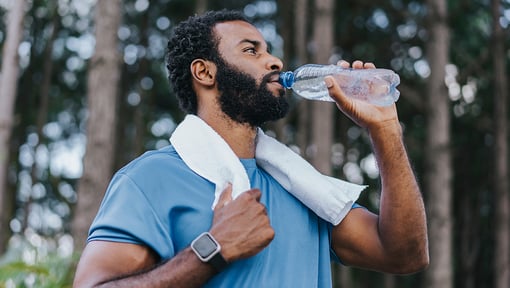
Yes, water is still essential, so don’t skip it. Research shows that not getting enough fluids can also leave you parched of energy and endurance. Drink water throughout the day, not just when you work out.
As a general rule, aim to drink about 2 cups of water 2 hours before a workout. During exercise, sip ½ to 1 cup of water every 15 – 20 minutes. For workouts longer than one hour, you can switch to a no-sugar-added sports drink to help replace electrolytes.
Some more fuel favorites
Power up with these balanced bites! There are many healthy pre- and post-workout snack combos out there, but here are some go-tos to get you started:
Before:
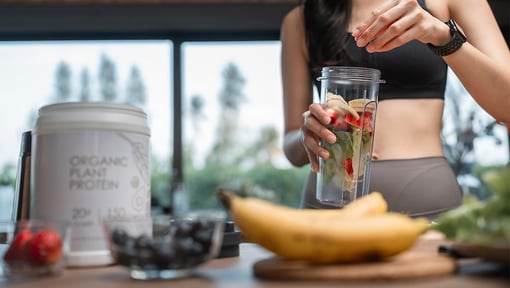
- Fruit smoothie
- Hummus and veggie wrap
- Peanut butter and jelly sandwich on whole wheat bread
After:
- Greek yogurt with granola, nuts, and fruit
- Tuna sandwich on whole wheat bread
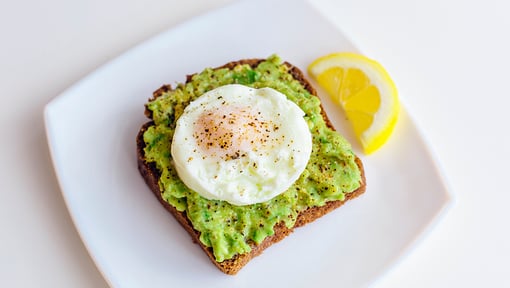
- Whole grain avocado toast with egg
The best food plan for any athlete is similar to the diet recommended for most healthy people. It all comes down to fueling with the right food groups at the right time and listening to your body. Head over to the Active&Fit social media channels and let us know what you’ll be snacking on pre- and post-workout!
Thanks for reading this article!
Ready to take your next step toward an active and fit lifestyle?
The Active&Fit Direct™ program (offered through sponsoring organizations and employers) can get you moving! Learn more and check your eligibility.
If you are a Medicare, Medicaid, Medicare Advantage, or Dual Special Needs Plan (DSNP) enrollee, your health plan may provide a subsidized fitness program. Be sure to discuss program availability and eligibility requirements with your health plan.
The information in this and other Active&Fit® blog articles is not intended to take the place of regular medical care or advice. Please check with your doctor before using this information or beginning any fitness or self-care program. Images used for this article do not depict any members of the Active&Fit Direct program.
References
American Heart Association. (2024, July 31). Food as fuel before, during and after workouts. https://www.heart.org/en/healthy-living/healthy-eating/eat-smart/nutrition-basics/food-as-fuel-before-during-and-after-workouts
Mayo Clinic Staff. (2021, June 17). Exercise intensity: How to measure it. Mayo Clinic. https://www.mayoclinic.org/healthy-lifestyle/fitness/in-depth/exercise-intensity/art-20046887
Mayo Clinic Staff. (2023, December 21). Maximize your workout by knowing what — and when — to eat. Mayo Clinic. https://www.mayoclinic.org/healthy-lifestyle/fitness/in-depth/exercise/art-20045506
Medline Plus. (2023, April 27). Nutrition and athletic performance. National Library of Medicine. https://medlineplus.gov/ency/article/002458.htm
USU Dietetics. (n.d.). Pre- and post-workout snacks. Utah State University. https://www.usu.edu/campusrec/files/Pre-Post-Workout-Meals-cookbook.pdf
This article was written by Celina Johnson, edited by Kimberley Reynolds, and clinically reviewed by Elizabeth Thompson, MPH, RDN, on July 8, 2025.

