

Dec 15, 2025
Some cleaning products have toxic chemicals. Do-it-yourself (DIY) cleaning products, made from non-toxic ingredients, remove the risks posed by harmful chemicals.
Making a house a home means keeping your rooms clean and fresh. And when it comes to cleaning products, you have choices. Some commercial cleaning products can actually harm your health and the health of your family and pets. Many of them contain toxic chemicals. One way to avoid these toxins is to make your own DIY cleaners from non-toxic ingredients found right in your kitchen cupboard—such as vinegar, baking soda, essential oils, water, and plain dish soap.
If you need inspiration to make the switch to DIY cleaning products, here are some of the health risks linked to long-term exposure to toxic chemicals found in many commercial cleaning products.
- Allergic reactions
- Development or worsening of asthma
- Chronic obstructive pulmonary disease
- Lung cancer
- Eye, nose, and throat irritation
- Headaches
- Loss of coordination
- Nausea
- Damage to the liver and kidneys
- Respiratory tract irritation
- Dizziness
- Visual disorders
- Memory impairment

Despite this long list of health risks, there is good news. It really takes only a little effort to wean yourself off commercial products and make your own DIY natural cleaners, instead. Even better? These homemade cleaners are often just as effective at cleaning and disinfecting your home as store-bought brands. Here’s a look at what the research says about common ingredients used in homemade cleaners:
- Vinegar helps kill germs and remove unwanted odors. It can also remove some stains from rugs and carpets. Mixed with water, vinegar is great for cleaning glass, cookware, chrome, coffee pots, and counters. Take care using it on fabric, or wood surfaces, as the acid in it may cause damage.
- Baking soda (sodium bicarbonate) has anti-bacterial properties. It helps disinfect and deodorize. You can leave an open box in your fridge to neutralize food smells. It also makes a great scrubbing agent for hard-to-remove stains in your oven, on pots and pans, in tile grout, and in toilet bowls.
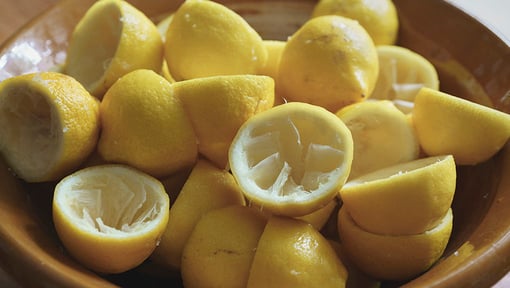
- Lemon juice has natural bleaching properties, so it is great for getting stains out. Just test it on a hidden area first to make sure it doesn’t cause discoloration. Lemon is also a natural deodorizer.
- Essential oils add a pleasant smell to your DIY cleaners. Many oils also contain anti-bacterial and anti-fungal properties, which help disinfect your home.
One caveat: Some essential oils, if not properly diluted , may cause adverse reactions in both people and pets, especially in those with certain health conditions, such as cardio-respiratory disease. If not used safely, essential oils may harm the lungs, interact with certain supplements and medications, and cause skin irritation. Talk with your doctor if you have any health problems, or if you’re not sure about the safety of using essential oils. You can also use lemon or lime juice mixed with water, instead of essential oils.
Soaps that are free of artificial ingredients. Read the ingredients labels and look for dish soaps that are plant-based and free of the synthetic and potentially harmful chemicals you often see in commercial brands. Avoid soaps with lye, phosphorus, animal-based fats, parabens, artificial fragrances, and formaldehyde-producing ingredients such as DMDM hydantoin.
Castile soap is just one of several good options. But it is highly concentrated, so be sure to dilute it with distilled water only. (Mixing castile soap with vinegar, baking soda, or other ingredients may cause white crusty spots to form on the surfaces you’re cleaning.)
Once you have these ingredients in place, you can put together your own kit with DIY cleaning products for every room in your house. The recipes below will give you the peace of mind that you’re keeping yourself and your loved ones safe from harmful chemicals.
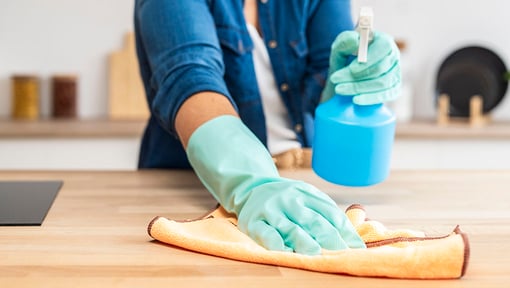
DIY all-purpose cleaner
First, make up a general, all-purpose cleaning solution. You can experiment with making the solution weaker or stronger. An all-purpose DIY cleaning solution can be used to clean and disinfect just about any hard surface in your home.
- 1/4 cup of white vinegar
- 12 − 20 drops of essential oil (Lavender is a good choice, but there are many other essential oils with disinfecting properties to choose from.)
- 1 tsp dish soap (without artificial additives). Avoid using castile soap for this recipe, since mixing it with baking soda or vinegar may cause white crusty spots to form.
- 2 cups of boiled (and cooled) tap water. Or, if you’d rather not boil the water first, use home-filtered, purified, or distilled water
Fill a reusable spray bottle with the 2 cups of water. Add all the other ingredients. Shake well.
For the bathroom
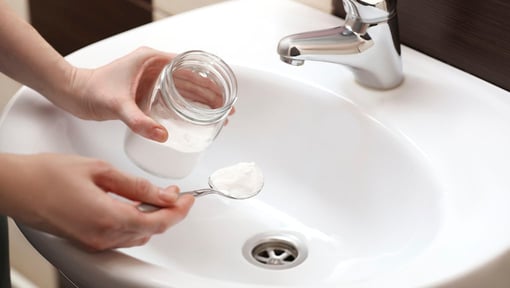
- All-purpose scrub: Sprinkle baking soda on a damp cloth for scrubbing tiles, sinks, and bathtubs or showers.
- Toilet bowl cleaner. You can also sprinkle baking soda on a toilet brush for scrubbing toilet bowls. To remove rings around the toilet bowl, flush the toilet to remove the water from the bowl. Then pour undiluted vinegar around the bowl before scrubbing.
- Grout and mildew cleaner: Dip a toothbrush in vinegar and scrub.
- Glass and mirror cleaner: Clean with a mixture of 3 tablespoons white vinegar and 1 cup of warm water in a spray bottle. Dry the glass with a newspaper to prevent fogging.
- Hard surfaces: Use microfiber cloths to pick up dust and hair. Or use a damp cloth and the DIY all-purpose cleaning recipe for disinfecting bathroom counters or toilet seats.
For the living room
- Window and glass cleaner: Spray a solution of 3 tablespoons white vinegar and one cup of warm water. Wipe dry with newspaper.
- Furniture polish: For unvarnished wood use olive oil. For varnished wood use 2 tablespoons of olive oil mixed with 1 tablespoon of white vinegar and 34 ounces of water in a spray bottle.
- Carpet cleaner: Sprinkle baking soda onto carpets before vacuuming.
For the kitchen
- Surface scrub: Put baking soda on a damp cloth to scrub sinks, counters, and appliances. Wipe any baking soda residue up with a clean wet cloth.
- Dish washing soap. If washing dishes by hand, use a plant-based liquid dish soap that is free of artificial ingredients such as perfumes, phosphorus, lye, parabens, or animal fat. But don’t use liquid dish soap in an automatic dishwasher, as it will cause an overflow of excessive soap suds that can damage the machine. Search online for a nontoxic, homemade automatic dishwashing detergent, instead—like this one .
- Pot and pan cleaner: Boil water with baking soda to loosen burned, stuck-on food.
- Floor cleaner. Use the DIY all-purpose cleaner described above. Or fill a 1-gallon bucket with hot water and add 12 to 20 drops of either lavender, peppermint, lemongrass, orange, or other favorite essential oil.
- Counter cleaners. Use microfiber or cotton cloths to wipe kitchen counters down. You can use hot water and/or the DIY all-purpose cleaner described above.
- Drain deodorizer. Cut up 2 to 3 lemon peels for the kitchen sink and run the garbage disposal with cool running water.
Some general safety considerations
Although these and other homemade cleaners are much safer than many commercial brands containing toxic chemicals, you’ll nonetheless want to use DIY cleaners safely.
For example, if you have pets or small children, you will want to be careful using common DIY cleaning ingredients you might see online. For example, borax is commonly recommended as a nontoxic cleaner. But borax is toxic to humans and pets. It can cause GI upset and mild GI irritation. And if your pet ingests a larger amount, it can damage their kidneys.
Many essential oils, while safe for humans, are harmful to pets. Talk with your veterinarian if you have any questions or concerns about the safety of any DIY household cleaners.
Essential oils, especially in undiluted form, can be harmful if a pet or young child gets the oil on the skin, inhales it, or ingests it. Birds are especially sensitive. If you use essential oils in your homemade cleaners, especially on floors, always dilute them, and keep your pets in another room until completely dry. If you use a diffuser, put it in a room away from pets and use it only for a short time—and never around birds.
Also, do not experiment and add borax, ammonia, rubbing alcohol, bleach, or other chemicals to your homemade cleaning recipes. Don’t even add vinegar, unless the recipe states to do so. These chemicals can react with each other and create dangerous toxic fumes.
Check with your vet or your own doctor or pediatrician about any questions you have about natural cleaners, just to be safe.

What about commercial “green” cleaning products?
In recent years, makers of cleaning products have developed and offer “green” cleaners. Some of these may be safer than traditional products. However, labels aren’t regulated, so knowing exactly what’s in a “green” cleaner is not always so easy to figure out. Even products marked "green" or "natural" may contain ingredients that can cause health problems.
Look for these words on the label to help sort out those soaps and cleaners that are less toxic:
- USDA organic
- Environmental Working Group (EWG)
- Natural Products Association
- Certified member of the Green Business Network®
The U.S. Environmental Protection Agency (EPA) has a list of products that meet its Safer Choice requirements for cleaning. Another source of information is Green Business Network . Commercial cleaners with safer ingredients are listed.
Are commercial cleaners really that harmful?
As you consider how to clean your home, you may want to take a deeper dive into why DIY cleaners may be better for your health than many commercial cleaners. As mentioned, many commercial household products release dangerous chemicals that can raise the risk for a host of health problems, especially with long-term exposure.
One, but certainly not the only, common toxin found in commercial cleaners: Volatile organic compounds (VOCs). VOCs pollute the air at room temperature and become up to 2 to 5 times more concentrated inside the home than outdoors. Research suggests that long-term exposure to VOCs can pose serious health risks.
Some of the common commercial products with VOCs include:
- Aerosol spray products (such as disinfectant sprays)
- Bottled, liquid disinfectants
- Air fresheners (spray and plug-in)
- Scented dryer sheets
- Chlorine bleach
- Phosphorous-based laundry detergents and dishwashing liquids
- Rug and upholstery cleaners
- Furniture and floor polish
- Oven cleaners
- Drain cleaners
- Any scented household cleaners with artificial perfumes
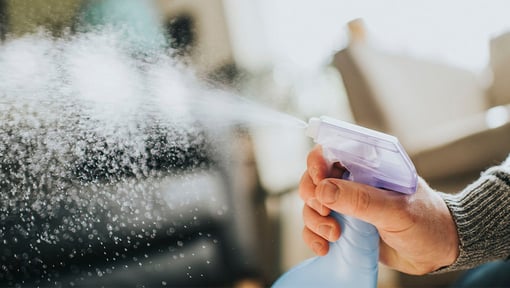
Start with small changes to the way you clean and freshen your home
If you are ready to switch to DIY cleaning products, there’s no need to feel overwhelmed. To start, choose a few commercial products to replace with homemade versions. Look at the list of offending cleaners above that contain volatile organic compounds. Start by replacing 1 or 2 items on the list with nontoxic DIY cleaners.
For example, an easy one to begin with might be air fresheners. Air fresheners help the air in your home smell good. Plug-ins and sprays are on the market and offer appealing scents like vanilla and lavender. But they may harbor VOCs.
Instead of using these products, add an enticing scent to your home in a natural way. Simmer spices, such as cinnamon or clove, in water in a pan on the stovetop. You can also use a diffuser with essential oils. Or simply ditch your commercial air fresheners and open the windows to enjoy fresh air, when the weather allows.
Final thoughts
You’ll want to do all you can to make your home a safe, nurturing, and healthy place. Using DIY cleaning products is one easy way to keep toxic chemicals out of your environment. Make some of the cleaners mentioned in this article or search online for recipes to make your own cleaners from natural substances. Breathe freely and know that you are doing what you can to protect your own health, and that of your family and pets.

Thanks for reading this article!
Ready to take your next step toward an active and fit lifestyle?
The Active&Fit Direct™ program (offered through sponsoring organizations and employers) can get you moving! Learn more and check your eligibility.
If you are a Medicare, Medicaid, Medicare Advantage, or Dual Special Needs Plan (DSNP) enrollee, your health plan may provide a subsidized fitness program. Be sure to discuss program availability and eligibility requirements with your health plan.
The information in this and other Active&Fit® blog articles is not intended to take the place of regular medical care or advice. Please check with your doctor before using this information or beginning any fitness or self-care program. Images used for this article do not depict any members of the Active&Fit Direct program.
References
Aguirre, S. (2022, October 27). Cleaning naturally with lemons, vinegar, and baking soda. https://www.thespruce.com/homemade-and-natural-cleaning-products-1900456#:~:text
American College of HealthCare Sciences. (n.d.). Essential oil safety: Avoiding top 3 mistakes in usage. https://achs.edu/blog/aromatherapy-essential-oil-dangers-and-safety/
American Lung Association. (2025, April 9). Cleaning supplies and household chemicals. https://www.lung.org/clean-air/indoor-air/indoor-air-pollutants/cleaning-supplies-household-chem#:~:text
American Society for the Prevention of Cruelty to Animals (ASPCA). (2022, June 23). The essentials of essential oils around pets. https://www.aspca.org/news/essentials-essential-oils-around-pets#:~:text
American Society for the Prevention of Cruelty to Animals ASPCA Pro. (n.d.) Deadly dangers of homemade slime and pets. https://www.aspcapro.org/resource/deadly-dangers-homemade-slime-and-pets
Christchurch City Council. (2008). Green cleaning: Healthy alternatives to household cleaners. https://www.ccc.govt.nz/assets/Documents/Environment/Sustainability/HouseholdChemicals-docs.pdf
Cleveland Clinic. (2024, January 8). Is castile soap a cure-all cleanser? https://health.clevelandclinic.org/castile-soap
Environmental Work Group. (2024). 7 ways to detoxify your home and keep it clean year ‘round. https://www.ewg.org/news-insights/news/2024/01/7-ways-detox-your-home-and-keep-it-clean-year-round
Falcó, I., Verdeguer, M., Aznar, R.,Sánchez, G., Randazzo, W. (2019). Sanitizing food contact surfaces by the use of essential oils. Innovative Food Science & Emerging Technologies, 51, 220−228. https://doi.org/10.1016/j.ifset.2018.02.01
Greene, E. (n.d.). The room-by-room home detox guide. Green America. https://greenamerica.org/your-home-detoxed/home-detox-guide
M. D. Anderson Cancer Center. (2022, October 17). 7 tips for reducing household toxins. https://www.mdanderson.org/cancerwise/how-a-scientist-approaches-household-toxins-and-cancer.h00-159543690.html
Mangalagiri, N. P., Panditi, S. K., & Jeevigunta, N. L. L. (2021). Antimicrobial activity of essential plant oils and their major components. Heliyon, 7(4), e06835. https://doi.org/10.1016/j.heliyon.2021.e06835
Pacheco Da Silva, E., Varraso, R., Lenzotti, A. M., Fezeu, L. K., Sit, G., Galan, P., Hercberg, S., Touvier, M., Paris, C., Dumas, O., & Le Moual, N. (2024). Household use of green cleaning products, disinfecting wipes, and asthma control among adults. The Journal of Allergy and Clinical Immunology. In Practice, 12(4), 919–926.e7. https://doi.org/10.1016/j.jaip.2023.12.029
Puškárová, A., Bučková, M., Kraková, L., Pangallo, D., & Kozics, K. (2017). The antibacterial and antifungal activity of six essential oils and their cyto/genotoxicity to human HEL 12469 cells. Scientific Reports, 7(1), 8211. https://doi.org/10.1038/s41598-017-08673-9
Reid, S. (n.d.). Swap out toxics to green your home. Green America. https://greenamerica.org/your-home-detoxed/swap-out-toxics-green-your-home
Temkin, A. M., Geller, S. L., Swanson, S. A., Leiba, N. S., Naidenko, O. V., & Andrews, D. Q. (2023). Volatile organic compounds emitted by conventional and "green" cleaning products in the U.S. market. Chemosphere, 341, 139570. https://doi.org/10.1016/j.chemosphere.2023.139570
The Simple Home Place. (2023, February 17). How to make DIY dishwashing detergent without borax. https://thesimplehomeplace.com/how-to-make-diy-dishwasher-detergent-without-borax/
United States Environmental Protection Agency. (2025, April 6). Identifying greener cleaning products. https://www.epa.gov/greenerproducts/identifying-greener-cleaning-products
United States Environmental Protection Agency. (2025, July 24). Volatile organic compounds’ impact on indoor air quality. https://www.epa.gov/indoor-air-quality-iaq/volatile-organic-compounds-impact-indoor-air-quality
United States Environmental Protection Agency. (2025, February 24) What are volatile organic compounds? https://www.epa.gov/indoor-air-quality-iaq/what-are-volatile-organic-compounds-vocs
University of Arkansas. (n.d.). Clean and green homemade cleaners. https://www.uaex.uada.edu/environment-nature/water/quality/clean-green-homemade-cleaners.aspx
Wayne, A., and Krupa, L. (2018, December 21). Are essential oils dangerous to pets? Tufts University. https://now.tufts.edu/2018/12/21/are-essential-oils-dangerous-pets#:~:text
Oregon State University, National Pesticide Information Center. (n.d.). Boric acid technical fact sheet. https://npic.orst.edu/factsheets/archive/borictech.html
This article was written by Sharon Odegaard, edited by Gail Olson, and clinically reviewed by Elizabeth Thompson, MPH, RDN, on October 7, 2025.

