

Mar 2, 2026
Getting the most out of your vacation depends on how well you plan it. Check out these 15 vacation-enhancing tips to plan your next getaway or staycation.
Vacations, by their very nature, are meant to enhance your health and well-being. That’s the whole point of taking one, right? A vacation gives you and your family a much-needed break from the demands of work, school, and home. This is your chance to unplug, ease stress, have fun, and stave off burnout.
Research backs these health perks. But here’s a caveat: Vacations—if not well planned—can become the very source of stress and fatigue you’re looking to escape.
An overly packed itinerary. Sky-high travel expenses. Crowded airports. Missed flights. An unexpected bout of food- or water-borne illness. These travel mishaps, and others, can quickly turn a dream vacation into a nightmare.
Fortunately, with a bit of thought and careful planning, you can create a vacation that helps you avoid such unexpected hiccups. You can tailor a getaway that allows you to truly unplug—one with a balanced mix of fun activities, exercise, and plenty of rest and relaxation.

15 strategies to plan your dream vacation
Whether you’re planning a low-key staycation or a trip to an exotic locale, here are 15 tips to help you create a stress-easing, health-enhancing vacation:
1. Reflect on what you need and want most from your vacation.
Are you exhausted and overly stressed? Maybe a relaxing staycation or a visit to a spa or fitness retreat in a serene mountain setting would be best? Are you craving adventure and excitement? Consider booking a white-water rafting tour or snowboarding trip. Are you missing family and old friends? Make plans for a family reunion. Use your imagination and indulge in some daydreaming to visualize your ideal vacation.
2. Create a travel budget that won’t break the bank.
One surefire way to make your vacation a stressful one is to overspend and come home broke or, worse, in debt. What can you truly afford? If your dream trip is going to rack up thousands in credit card debt, consider a shorter trip, a less costly destination, or even a staycation. Hometown vacations will save you lots of money on flights, rental cars, or hotels. And you can likely find low-cost ways to play tourist in your own hometown by visiting museums, parks, hiking trails, and restaurants in your area. 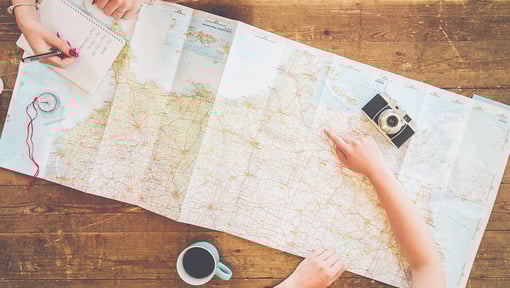
3. Plan early.
Give yourself plenty of time to decide where you want to go, research, and book your flights, rental cars, train rides, tours, and hotels. For example, choose lodging that’s in your budget but also a good fit for you and your family. Do you love classic old hotels full of charm and history? Or would you prefer a rustic mountain cabin or a modern hotel with amenities such as an on-site gym, spa, gift shop, and restaurants? Also, the sooner you start your search, the more likely you are to find travel deals.
4. Consider traveling outside busy holiday periods.
Unless you’re planning to visit family or friends for the holidays, think about traveling outside of holiday periods. Flights and hotels tend to be more expensive during the holidays. Airports are often busier, more crowded, and prone to long lines, delays, and cancellations. All these potential travel hurdles can add to the stress of the situation.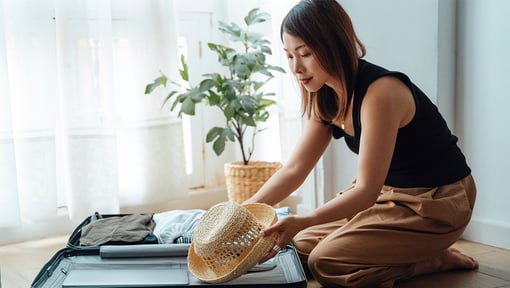
5. Pack light.
Lugging multiple overnight bags and heavy suitcases around airports and between hotels can make any getaway more stressful. If you can, pack just 1 or 2 carry-on bags and skip the luggage check line. You’ll avoid stress, save time, and be less likely to incur a muscle or joint injury from lifting heavy bags off conveyor belts and into rental cars.
6. Consider a shorter trip.
Studies suggest that more frequent, shorter vacations are more effective than longer trips for easing stress and boosting health. However, the amount of time that you want and need for a vacation is a personal choice. There is no one-size-fits-all timeframe. Talk with your travel companions and come up with a timeline that works best for everyone. 
7. Schedule a day or two of recovery time.
If possible, add a couple of buffer days at the end of your staycation or getaway. It’s tough going to work early in the morning after getting in late the night before. Even if you’re doing a staycation, it’s a good idea to have a day to recover from your hometown activities before heading back to work.
8. Aim for a realistic itinerary.
Research suggests that vacations with plenty of novel activities and exercise are especially good for easing stress and boosting mental and physical health. But resist the temptation to cram too many activities into your trip.
Pare down your list of destinations. Consider spending at least 2 to 3 nights (or more) in each location, so you can schedule your sightseeing tours, hikes, or museum visits over a few days, versus packing them all into one day.
This approach will also give you time to rest and relax, hang out at a sidewalk café to soak up the scenery, or lounge in a hammock. And you’ll avoid packing back up every few days to spend hours on trains, buses, or rental cars traveling to multiple destinations. If you’re planning a staycation, don’t use the entire break to catch up on chores, home improvement projects, and errands. Schedule some vacation days off for fun and relaxation, too.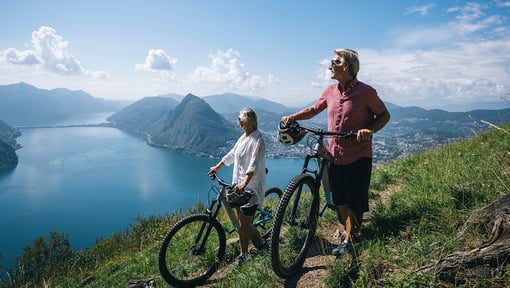 9. Look for novelty.
Research suggests that vacations do an even better job of boosting your health when you see new sites and have new experiences. If you’re doing a staycation, visit a park or urban hiking trail you’ve never been on before. Or buy tickets to a new play or music concert venue. If you’re traveling out of town, plan activities in that area that you’ve never tried before. Perhaps tours of historical sites or outdoor adventures, such as zip-lining, snowboarding, or mountain biking.
10. Spend time in nature.
Ample findings suggest that time spent in nature can help enhance cognitive function, improve mood, and boost your health and well-being. Even 20 minutes spent in nature can help lower the stress hormone cortisol, your blood pressure, and your heart rate ─ perks that all support your heart health. So, if possible, plan some vacation activities that will get you out into nature.
11. Weave in some daily exercise.
To reap the health rewards that vacations offer, make time for exercise. That doesn’t mean you have to get it at the hotel gym. Look for opportunities to integrate exercise into your sightseeing and outdoor adventure plans. Climb some stairs at ancient archeological sites. Schedule some cycling and walking tours. Or look for hiking trails, paddling adventures, or other outdoor exercise opportunities.
12. Don’t forget to rest and relax (R&R).
Getting some well-deserved R&R is a cornerstone of any vacation. You can automatically carve out time for it by not packing too many destinations and sightseeing activities into your trip. Even better, brainstorm a list of your favorite R&R activities that you’d most like to indulge in once your vacation begins. This might be lounging on the beach with a good book, taking naps, having a picnic, kicking up your feet and simply tuning out, or sharing leisurely meals with traveling companions.
13. Make self-care the centerpiece of your trip.
Self-care should be a priority during any vacation. Exercise and R&R are already good examples of the self-care you’ll want to weave into your vacation—but there are others.
Hydrate well each day and don’t overindulge in alcohol. Stick with a healthy, nutritious diet. (Sure, it’s fine to sample the local cuisine, but if it’s overly rich, moderation is key.) Get plenty of sleep. Practice good hygiene, including dental hygiene. Take long, relaxing baths or hot showers. Get plenty of sleep. If your budget allows, book a massage or aromatherapy session at a local spa.
14. Connect with others.
Sharing new experiences with family or other traveling companions can enhance both your vacation and your health. Vacations also offer opportunities to share some fun with new people or even make new friends . Bonding with others and deepening your social connections helps ease stress. It also lowers the risk for chronic diseases such as dementia, heart disease, and more. Strong social bonds provide a sense of belonging and can help you feel loved and cared for. They help you live a longer, healthier life. 
15. Plan to be spontaneous.
Finally, although planning is crucial, try not to plan every minute of it. Doing so can strip a lot of the fun and spontaneity out of your trip or staycation. Set aside a few days of your vacation to take it as it comes. Give yourself permission, in the moment, to decide what you feel like doing. In the mood for trying new local cuisine? Hit up that fun restaurant that caught your eye. Craving some exercise? Rent a bike and join a cycling tour. Want to nap by the pool? Indulge your whim!
Keep in mind that vacations can also be learning opportunities. If you find yourself feeling stressed or overwhelmed by any aspect of your vacation, take note of it. That way, you can plan to side-step that feature when you plan your next vacation.
And give yourself permission to adjust things as you go. Have fun, rest up, and enjoy your time off. Your health and well-being will thank you.

Thanks for reading this article!
Ready to take your next step toward an active and fit lifestyle?
The Active&Fit Direct™ program (offered through sponsoring organizations and employers) can get you moving! Learn more and check your eligibility.
If you are a Medicare, Medicaid, Medicare Advantage, or Dual Special Needs Plan (DSNP) enrollee, your health plan may provide a subsidized fitness program. Be sure to discuss program availability and eligibility requirements with your health plan.
The information in this and other Active&Fit® blog articles is not intended to take the place of regular medical care or advice. Please check with your doctor before using this information or beginning any fitness or self-care program. Images used for this article do not depict any members of the Active&Fit Direct program.
References
Almeida, D. M., Charles, S. T., Mogle, J., Drewelies, J., Aldwin, C. M., Spiro, A. III, & Gerstorf, D. (2020). Charting adult development through (historically changing) daily stress processes. American Psychologist, 75(4), 511–524. https://doi.org/10.1037/amp0000597
Beck, R. (2025). The case for spontaneity. University of Arizona
https://alumni.arizona.edu/arizona-magazine/winter-2025/case-spontaneity
Centers for Disease Control and Prevention. (2024, May 15). Social connection. https://www.cdc.gov/social-connectedness/about/index.html
Cleveland Clinic. (2025, March 18). What vacations do for your brain. Cleveland Clinic Health Essentials. https://health.clevelandclinic.org/benefits-of-going-on-vacation
de Bloom, J., Geurts, S. A., Kompier, M. A. (2012). Effects of short vacations, vacation activities and experiences on employee health and well-being. Stress and Health, 28(4), 305-318. https://doi.org/10.1002/smi.1434
Godman, H. (2023, October 22). Get back your social life to boost thinking, memory, and health. Harvard Health Publishing, Harvard Medical School. https://www.health.harvard.edu/mind-and-mood/get-back-your-social-life-to-boost-thinking-memory-and-health
Hardman, A. M. (n.d.). Tips for taking care of yourself: Self-care practices. Mississippi State University Extension.
https://extension.msstate.edu/publications/tips-for-taking-care-yourself-self-care-practices
Hataway, L. (2025, January 27). Vacations are good for employee well-being, and the effects are long lasting. University of Georgia. https://news.uga.edu/vacations-are-good-for-employees/
Kawakubo, A., & Oguchi, T. (2022). What promotes the happiness of vacationers? A focus on vacation experiences for Japanese people during winter vacation. Frontiers in Sports and Active Living, 26(4), 872084. https://doi.org/10.3389/fspor.2022.872084
Mayo Clinic. (2023, August 26). Exercise: 7 benefits of regular physical activity.
https://www.mayoclinic.org/healthy-lifestyle/fitness/in-depth/exercise/art-20048389
Mayo Clinic. (2024, October 15). Friendships: Enrich your life and improve your health. https://www.mayoclinic.org/healthy-lifestyle/adult-health/in-depth/friendships/art-20044860
Mayo Clinic. (2024, January 24). Relaxation techniques: Try these steps to lower stress. https://www.mayoclinic.org/healthy-lifestyle/stress-management/in-depth/relaxation-technique/art-20045368
Nakao, M. (2019). Heart rate variability and perceived stress as measurements of relaxation response. Journal of Clinical Medicine, 8(10), 1704. http://dx.doi.org/10.3390/jcm8101704
Perlmutter, A. (2023, March 24). The brain benefits of social connection. Psychology Today. https://www.psychologytoday.com/us/blog/the-modern-brain/202303/the-brain-benefits-of-social-connection
Rice, E. L., & Fredrickson, BL. (2017). Of passions and positive spontaneous thoughts. Cognitive Therapy and Research, 41(3), 350-361. https://doi.org/10.1007/s10608-016-9755-3
Robles, T. F., & Carroll, J. E. (2011). Restorative biological processes and health. Social and Personality Psychology Compass, 5(8), 518–537. https://doi.org/10.1111/j.1751-9004.2011.00368.x
University of California, Los Angeles. (2025, May 14). 7 benefits of spending time in nature. UCLA Health.
https://www.uclahealth.org/news/article/7-health-benefits-spending-time-nature#
This article was written by Gail Olson, edited by Jason Nielsen, and clinically reviewed by Elizabeth Thompson, MPH, RDN, on December 17, 2025.

