

Jul 13, 2026
Kale and quinoa aren't the only superfoods around. There’s a whole world of nutrient-dense foods waiting to be discovered.
Superfoods seems like a recent term. It’s a buzzword that keeps popping up, turning uncommon foods into the latest health craze. So, you may be surprised to learn that the first recorded superfood was the humble banana. And it was labeled a superfood over 100 years ago.
Around World War I, The United Fruit Company began marketing bananas as a superfood. They promoted bananas as low cost, healthy, and easy to digest. The American Medical Association (AMA) backed this claim. Research at the time found that bananas could help treat celiac disease and diabetes. (This was before the role of gluten in celiac disease was understood.) With the support of the AMA, the superfood label stuck, and bananas became a staple food.
These days, new superfoods are introduced all the time. Avocados, chia seeds, green tea, salmon, and seaweed—all of these foods gained popularity thanks to being marketed as superfoods.
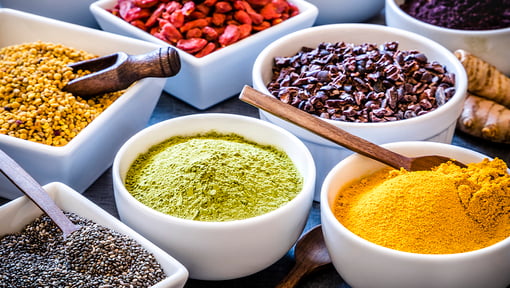
So, what is a superfood?
The term superfood is used to describe foods that are packed with compounds that are good for your health. It is not a scientific label—it’s a marketing term. It’s used by companies to sell more products. But these foods do tend to be quite nutritious. They are often high in nutrients like antioxidants, fiber, and omega-3 fatty acids. In other words, superfoods are nutrient-dense foods.
Keep in mind that no single food will make you healthy, super or not. Health comes from your overall diet and lifestyle. The key is to eat a wide variety of foods to get a balanced mix of all the nutrients you need. And yet, it can be fun to try new foods. And it surely doesn’t hurt to eat whole foods that are rich in nutrients.
Do you wonder if you’re eating the right foods? Here are 5 signs that your food plan may need a tune-up.
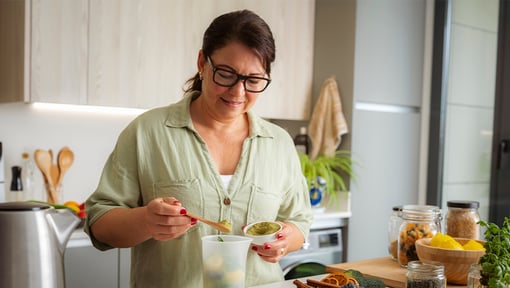
Superfoods from around the globe
Ready to dive into the world of nutrient-dense foods? The superfoods below come from all over the world. And they are rich in nutrients that many people could use more of, such as fiber, protein, and calcium. Most of them are also antioxidant-rich foods, which may help prevent disease . You may not be able to find these foods at your local grocery store, but you can find them at health food stores, international or cultural supermarkets, or online.
Check out these 5 superfoods from around the world:
1. Moringa (India)
-
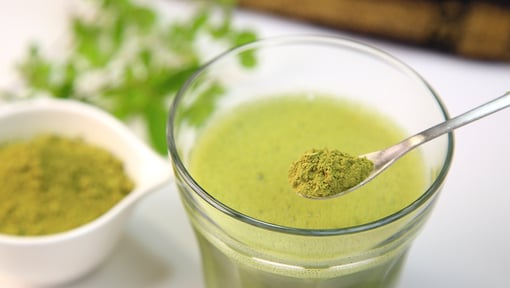
What it is: Leaves and seeds from the moringa tree, often called the “miracle tree.” In the US, you’re most likely to find moringa as a powder made from the leaves. It has a grassy taste, like matcha. Fresh leaves have a bitter, peppery taste.
-
Why it’s healthy: Rich in protein, iron, calcium, magnesium, potassium, vitamins A and C, and antioxidants. These nutrients help support healthy bones and eyesight. They help fight inflammation.
- How to use it: Add moringa powder to smoothies, yogurt, teas, and soups. Sprinkle on salads or oatmeal.
2. Teff (Ethiopia)
-
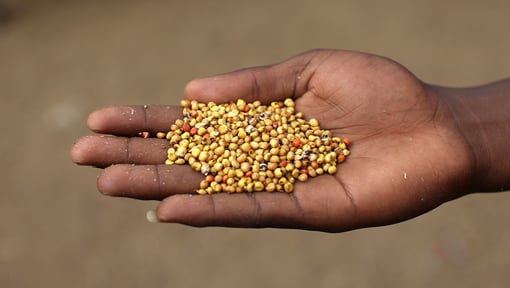
What it is: A tiny, gluten-free whole grain. It comes in white, brown, and red varieties. White or ivory teff has the mildest flavor. Darker varieties have an earthier flavor.
-
Why it’s healthy: High in calcium and resistant starch , which can help with blood sugar management and weight control.
- How to use it: Eat it as a porridge, use it as the base for a grain bowl, or add it to soups. Use teff flour for gluten-free baking.
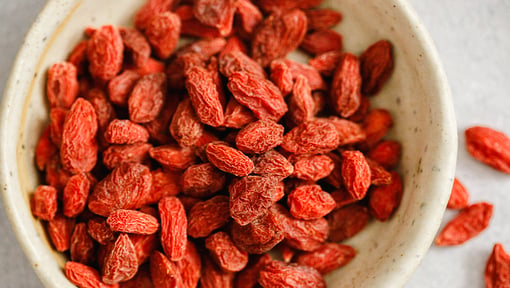
3. Goji berry (China):
-
What it is: A small red berry with a tart flavor. It’s also known as a wolfberry and typically sold dried.
-
Why it’s healthy: High in protein and fiber, as well as many vitamins and minerals, and packed with antioxidants. Vitamins and minerals include vitamins A and C, riboflavin, potassium, magnesium, iron, and zinc. Goji berries are also rich in lutein and zeaxanthin, which support eye health.
- How to use it: Eat dried goji berries the same way you would other dried fruit—directly from the package or added to oatmeal, homemade trail mix, cereal, yogurt, etc. You can also soak them in water for 10 minutes to rehydrate them. Then simply eat them or blend them into a smoothie.
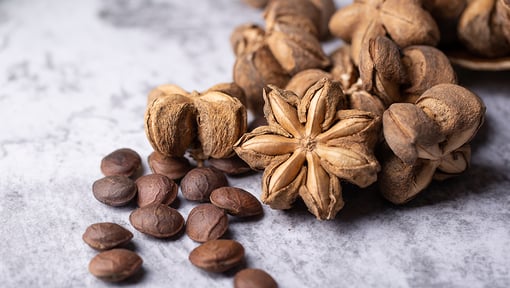
4. Sacha inchi (Peru):
-
What it is: A star-shaped seed with a nutty flavor. It’s also known as an Inca peanut.
-
Why it’s healthy: A good source of antioxidants and vitamin E. It’s also high in protein and rich in omega-3 and omega-6 fatty acids—polyunsaturated fats that support heart health.
- How to use it: Snack on the roasted seeds or add them to salads, homemade trail mix, or homemade granola. You can also use the oil in dressings. Add powdered sacha inchi to smoothies or energy bites for a protein boost.
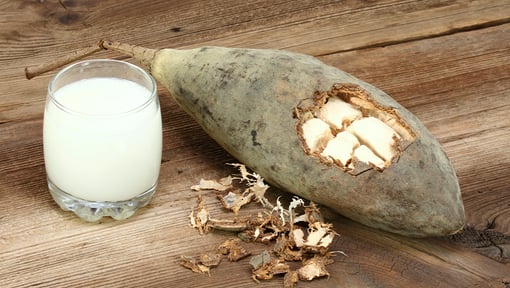
5. Baobab (sub-Saharan Africa):
-
What it is: Fruit from the “tree of life.” The fruit dries naturally on the tree’s branches, and the fruit pulp is removed and ground into a powder.
-
Why it’s healthy: High in vitamin C and a good source of B vitamins, potassium, magnesium, iron, calcium, fiber, and antioxidants.
- How to use it: Mix it into smoothies or sprinkle on yogurt. Add it to homemade snack bars or baked goods.
Remember, your health isn’t built on one—or even a few—superfoods. It comes from the consistent healthy choices that you make each day. Aim for a balanced mix of fruits and veggies, lean protein, whole grains, and healthy fats (plus plenty of water). And if you’re feeling adventurous, explore the world of superfoods. Let them add an exciting nutritional boost to your already healthy diet.
Thanks for reading this article!
Ready to take your next step toward an active and fit lifestyle?
The Active&Fit Direct™ program (offered through sponsoring organizations and employers) can get you moving! Learn more and check your eligibility.
If you are a Medicare, Medicaid, Medicare Advantage, or Dual Special Needs Plan (DSNP) enrollee, your health plan may provide a subsidized fitness program. Be sure to discuss program availability and eligibility requirements with your health plan.
The information in this and other Active&Fit® blog articles is not intended to take the place of regular medical care or advice. Please check with your doctor before using this information or beginning any fitness or self-care program. Images used for this article do not depict any members of the Active&Fit Direct program.
References
Anderson, L. (2022, March 10). Baobab: A super fruit? Michigan State University. https://www.canr.msu.edu/news/baobab_a_super_fruit
Asogwa, I. S., Ibrahim, A. N., & Agbaka, J. I. (2021). African baobab: Its role in enhancing nutrition, health, and the environment. Trees, Forests and People, 3, Article 100043. https://doi.org/10.1016/j.tfp.2020.100043
Cleveland Clinic. (2026, January 13). A quick introduction to moringa. https://health.clevelandclinic.org/moringa-benefits
Damiani, R. (2023, September 26). New evidence of health benefits from African grain teff. UNC Greensboro. https://research.uncg.edu/news/new-evidence-of-health-benefits-from-african-grain-teff/
Fields, L. (2022, March 21). Have you tried goji berries? The Well by Northwell Health. https://thewell.northwell.edu/healthy-living-fitness/benefits-goji-berries
Harvard T.H. Chan School of Public Health. (n.d.). Superfoods or superhype? The Nutrition Source. https://nutritionsource.hsph.harvard.edu/superfoods/
Hendley, J. (2026, February 23). Resistant starch: Can you make the carbs you eat a little healthier? Harvard Health Publishing, Harvard Medical School. https://www.health.harvard.edu/diet-and-nutrition/resistant-starch-can-you-make-the-carbs-you-eat-a-little-healthier
Jackson, S. (2015). Baobab: The tree of life—an ethnopharmacological review. HerbalGram, 108, 45–53. https://www.herbalgram.org/resources/herbalgram/issues/108/table-of-contents/hg108-feat-baobab/
Ma, Z. F., Zhang, H., Teh, S. S., Wang, C. W., Zhang, Y., Hayford, F., Wang, L., Ma, T., Dong, Z., Zhang, Y., & Zhu, Y. (2019). Goji berries as a potential natural antioxidant medicine: An insight into their molecular mechanisms of action. Oxidative Medicine and Cellular Longevity, 2019, Article 2437397. https://doi.org/10.1155/2019/2437397
Mayo Clinic. (2025, January 25). Add antioxidants to your diet. https://www.mayoclinic.org/healthy-lifestyle/nutrition-and-healthy-eating/in-depth/add-antioxidants-to-your-diet/art-20546814
Oldways Whole Grains Council. (n.d.). Teff and millet – November grains of the month. https://wholegrainscouncil.org/whole-grains-101/grain-month-calendar/teff-and-millet-%E2%80%93-november-grains-month
Quinton, A. (2018, October 18). Moringa: The next superfood? UC Davis. https://www.ucdavis.edu/food/news/moringa-next-superfood
Sacha inchi: Super seeds. (2022, June 1). Plants & people: the intersection of botany and human experience. https://scalar.usc.edu/works/plants-and-people/sacha-inchi-super-seeds
UC Davis Health. (2022, January 13). Dried goji berries may provide protection against age-related macular degeneration. https://health.ucdavis.edu/news/headlines/dried-goji-berries-may-provide-protection-against-age-related-macular-degeneration/2022/01
University of California, Davis. (2025, January 6). What makes superfood so super? https://www.ucdavis.edu/food/news/what-makes-superfood-so-super
World Food Programme. (2024, October 16). Super resilient, super nutritious superfoods! https://www.wfp.org/stories/super-resilient-super-nutritious-superfoods
This article was written by Keleigh Somes, edited by Gail Olson, and clinically reviewed by Elizabeth Thompson, MPH, RDN, on April 24, 2026.

