

Feb 9, 2026
Disconnecting from your device can be a good thing. Learn ways to set digital boundaries with your device without ghosting everyone you know.
Life can feel overwhelming at times. Sometimes, that’s unavoidable—whether you’re navigating a major life transition or managing the ups and downs of relationships. But there are steps you can take to lessen the impact these stressors have on you. Setting boundaries with your devices may be just what you need to regain a sense of balance and control.
Chances are, you may not even notice that your devices are causing stress. Or maybe you do, and you figure there’s no way around it. But that’s not true! You can set boundaries and still maintain a healthy balance of screen time. The issue arises when you fall into an all-or-nothing approach with your smartphone or other devices. Too much screen time can be taxing, and too little can lead to “ghosting” or cutting off tech contact from others without any explanation.
Take a closer look at why setting digital boundaries can be helpful—and how you can strike the right balance for yourself.

Why setting digital boundaries matters
The onslaught of notifications, the pressure to respond quickly, and information overload can cause digital overwhelm. This can make it hard to focus, relax, or maintain healthy relationships.
Setting boundaries with your device can help in lots of ways:
- Improves well-being and mental health. With the help of digital boundaries, you can reduce distractions and information overload. This can improve your focus and help you maintain your attention for longer. It can also reduce stress and symptoms of anxiety and depression.
- Helps with sleep and mood. Too much screen time—especially right before bed—can disrupt your sleep cycle. Setting digital boundaries—such as winding down without your device before bed—helps your body relax and get more restful sleep, which in turn improves your mood and overall functioning.
- Strengthens relationships. You can be more present in your relationships when you set boundaries. By limiting distractions during conversations, you can have more quality time together and deepen those connections.
- Give you more time for offline activities. Less time on your device means more time for hobbies, exercise, or other activities you enjoy. And these interests can bring you joy and can help support your overall well-being.
The idea isn’t to do away with screen time usage altogether. Instead, it’s about finding balance. Your devices should help serve your well-being. Not to overwhelm you. If you spend a lot of time on your device, limiting its usage could help. Even if you are not on your device often, it’s still worthwhile to let others know why you might not respond quickly to messages.
To find the sweet spot and avoid ghosting while still protecting your peace, communication is key.

4 ways you can set digital boundaries
When communicating your boundaries, aim to be clear yet friendly. Don’t feel the need to apologize for self-care. You can just explain why you need the boundary: “This helps me stay balanced and present,” or “This makes me feel less anxious.”
It’s also important to set your expectations for response times. “I don’t reply to work emails after 6 PM, but I’ll answer in the morning.” Or “I’m taking a break from group chats, but let’s catch up in person next week!”
There are several ways to set digital boundaries. You can:
1. Set a time boundary.
Designate certain times of the day for using your device. You can limit your social media usage—no social media after 8 pm. You can try email-free weekends. You can set an after-hours boundary and say you’re not available after 7 pm. This can help avoid burnout and support work-life balance, too.
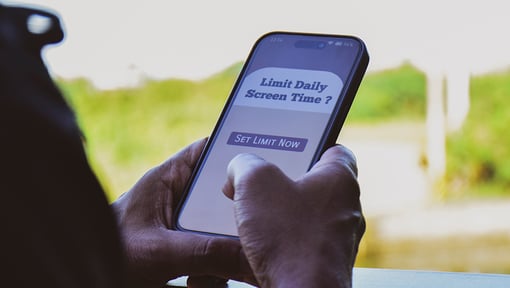
Many apps also have time management features. You can use this to limit the number of hours you spend per day on specific apps.
2. Set a space boundary.
Choose a physical space where you’d like to limit your screentime and make it a screen-free zone. This can be your bedroom, the dinner table, or your porch. That way, when you go outside to sit for your morning coffee or go to your bedroom to take a nap, you’re able to do so without the distraction of your device. This can also help encourage meaningful offline interactions with your family or friends.
3. Set emotional boundaries.
If you’re on your device often, you're more likely to come across bad news and information—a.k.a., “doomscrolling.” To avoid this, it can help to mute, unfollow, or block accounts that drain your energy. This can help your mood and prevent unwanted stress.
4. Set technology limits.
We live in a highly digital world, which means you likely have several devices that you use daily. Try to limit the number of devices you use at once. Multitasking can lead to information overload. Resist the urge to be on your laptop or phone while watching TV.
As noted, built-in app features can be a great way to limit your screen time. You can also manage your notifications. Customize alerts so only specific contacts can reach you after hours. All others stay muted until the next day. It may also be helpful to disable non-essential notifications.
Overcoming guilt when setting boundaries
You can set boundaries without fully disconnecting from your device and, in turn, the people in your life. Just be sure to communicate your intentions clearly. Doing so can help you avoid misunderstandings and maintain healthy relationships.
So, try to reframe the way you view setting boundaries. It’s not about ignoring your friends, family, or colleagues. It’s about self-care—it’s even about respect for others.
When you set boundaries, you can protect your peace of mind while staying connected in more meaningful ways. And when you communicate those boundaries, you’ll keep others aware instead of leaving them in the dark. Give yourself grace to adjust and find what boundaries work best for you. With a healthy balance between your digital life and offline moments, you may feel more at ease with your time, energy, and mental well-being.

Thanks for reading this article!
Ready to take your next step toward an active and fit lifestyle?
The Active&Fit Direct™ program (offered through sponsoring organizations and employers) can get you moving! Learn more and check your eligibility.
If you are a Medicare, Medicaid, Medicare Advantage, or Dual Special Needs Plan (DSNP) enrollee, your health plan may provide a subsidized fitness program. Be sure to discuss program availability and eligibility requirements with your health plan.
The information in this and other Active&Fit® blog articles is not intended to take the place of regular medical care or advice. Please check with your doctor before using this information or beginning any fitness or self-care program. Images used for this article do not depict any members of the Active&Fit Direct program.
References
American Academy of Pediatrics. (n.d.). Screen time guidelines. Center of Excellence on Social Media and Youth Mental Health: Q&A portal. https://www.aap.org/en/patient-care/media-and-children/center-of-excellence-on-social-media-and-youth-mental-health/qa-portal/qa-portal-library/qa-portal-library-questions/screen-time-guidelines/
Bawden, D., & Robinson, L. (2020, June 30). Information overload: An introduction. Oxford Research Encyclopedia of Politics. https://doi.org/10.1093/acrefore/9780190228637.013.1360
Boston Children’s Hospital. (2024, May). Where to start: Mental health resources from Mental Health America. Boston Children’s Digital Wellness Lab. https://digitalwellnesslab.org/articles/where-to-start-mental-health-resources-from-mental-health-america/
Cleveland Clinic. (2021, June 1). Haunted: The trend toward ghosting. https://health.clevelandclinic.org/haunted-the-trend-toward-ghosting
Georgetown University. (2025, November 10). Digital detoxes work. Here’s what reduced screen time can do for you. https://www.georgetown.edu/news/digital-detox-reduce-screen-time-benefits/
Mayo Clinic Health System. (n.d.). Slim your screen time. https://www.mayoclinichealthsystem.org/wellness/slim-your-screen-time
Penn State Extension. (2025, November 5). What new research reveals about social media and mental health. https://extension.psu.edu/what-new-research-reveals-about-social-media-and-mental-health
SAMHSA. (2025, September 23). Online health and safety for children and youth: Best practices for families and guidance for industry. https://www.samhsa.gov/mental-health/children-and-families/online-health-and-safety-for-children-and-youth
Weber State University. (2023, April). Digital boundaries. https://www.weber.edu/academicpeercoaching/blog/digital-boundaries.html
This article was written by Stephanie Ruiz, edited by Jason Nielsen, and clinically reviewed by Elizabeth Thompson, MPH, RDN, on November 20, 2025.

