

Jan 12, 2026
It’s no secret that gratitude directly benefits the health of your mind and body. As it turns out, it also fosters the adoption of healthier lifestyle habits.
Cultivating and practicing gratitude can improve your health in a range of ways. It can ease stress, anxiety, and depression. It can brighten your mood and enhance your sleep, energy, and mental focus. Gratitude also fosters a positive, optimistic frame of mind. It boosts patience and motivation. It deepens your bonds with others, helping to prevent isolation and loneliness. Gratitude can even have a positive effect on your physical health. It’s been shown to quell inflammation, ease pain, and lower blood pressure.
Yet, beyond these direct benefits to your health, gratitude does even more. Research suggests that grateful people also tend to adopt healthier habits—such as eating a nutrient-rich diet, sleeping better, quitting tobacco, and exercising regularly.
And they seem to form these habits more organically and with greater ease. This is good news, given that healthier habits help lower your risk of chronic disease and foster longevity.
To understand how a grateful mindset leads to healthier habit choices, let’s take a closer look at exactly what gratitude is and why it can be unique to each person.
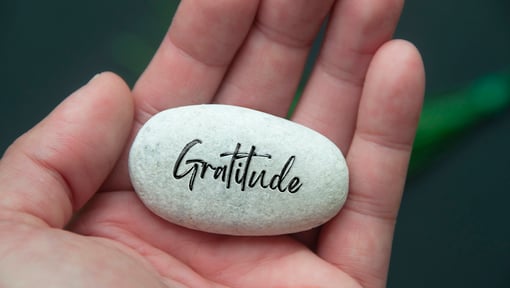
Defining gratitude is somewhat personal
Think about what gratitude means to you. You might think of it as a feeling, an attitude, an inner strength, or a value. It could be all of these things—or more. Whatever you call it, feeling grateful goes beyond saying “thank you” when someone is kind to you or helps you out. It’s more than just good manners. Gratitude is a mindset. It’s a positive and helpful way of thinking and acting—not only during good times—but also during bad times.
Feeling grateful can transform your outlook from “the glass is half empty” to “the glass is half full.” It shifts your focus to what’s good in your life and helps you dwell less on what’s bad. Gratitude can help displace negative thoughts and feelings like frustration, envy, resentment, regret, or hopelessness.
At the same time, being grateful doesn’t mean you see your life as perfect. Nor does it mean that you pretend to be happy about events in your life—past or present—that are unpleasant for you. Instead, it means appreciating what has been good in your life up to this moment. And it means casting an eye ahead toward what you believe may be good in the future.
Practicing and building gratitude is easier when you understand its 2 basic types: state gratitude and trait gratitude.
- State gratitude is a momentary feeling of thankfulness triggered when something good happens to you. It’s fleeting. It comes and goes, depending on the circumstance.
- Trait gratitude, on the other hand, is a lasting, stable part of your makeup. It’s a deeply rooted, integral aspect of your inner nature that is less dependent upon circumstances.
Trait gratitude offers a more stable, readily available inner resource needed to embrace healthier habits. And finding ways to practice state gratitude more often is one way to cultivate your trait gratitude. Before we outline some practical ways to increase both types of gratitude, let’s take a closer look at how it eases the formation of healthier lifestyle habits. 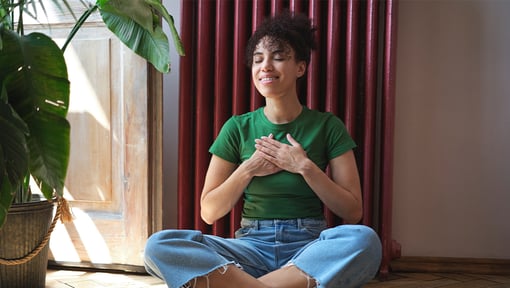
6 ways gratitude leads to healthier habits
Kicking bad habits and adopting healthy ones often takes discipline, patience, willpower, motivation, energy, and support from others. Gratitude is a powerful tool for tapping into these inner resources by helping to:
- Change your brain. Gratitude has been shown to increase gray matter in the prefrontal cortex—an area of the brain involved in impulse control. Better impulse control helps you more easily say “no” to cravings for junk food, alcohol, or tobacco. Feeling grateful also creates and reinforces new neural pathways associated with positive feelings, which in turn helps bolster motivation.
- Cultivate greater patience. Another way gratitude helps you say “no” to unhealthy lifestyle habits is by helping you develop greater patience. When you feel more patient, you strengthen your ability to delay gratification—that sense of pleasure and reward your brain feels when you indulge in unhealthy foods and other substances. In this way, patience is key to helping you stay on track with your goals. It helps you push through any setbacks and gives you the staying power needed to work towards your health goals while you wait for the good results to roll in.
- Encourage greater optimism and motivation. Gratitude boosts levels of feel-good brain chemicals such as dopamine and serotonin, both of which lead to a happy, more optimistic outlook. Feeling hopeful helps you view healthy habit changes as opportunities rather than hurdles. Gratitude also increases your motivation to take a more proactive role in your health. For example, a gratitude-induced boost in mood is likely to motivate you to cook healthier meals, get your workouts in, and see your doctor when you need to.
- Enhance your belief in yourself. Research suggests that a grateful mindset leads to greater self-efficacy. That’s the inner belief that you have what it takes to achieve the goals you’ve set for yourself, including the adoption of healthier lifestyle habits.
- Sleep more soundly. Studies have found that grateful people report sleeping better and feeling more rested. This may be due to the practice of counting your blessings—perhaps in a gratitude journal—right before you go to bed. Research suggests this practice calms the mind and minimizes worries or negative thoughts that might keep you awake.
Regularly getting sound sleep keeps your body energized. That’s going to help you stick with your workouts or even shop for, prepare, and cook healthier meals. Being sleep-deprived, on the other hand, can drain you and make it harder to stick with healthy habits. Poor sleep can also increase hunger, calorie consumption, and cravings for high-fat and high-sugar junk foods. - Bond more deeply with others. Feeling grateful helps you form closer bonds with others. This strengthens your social support system, a key resource that helps you to start and stick with healthier lifestyle choices.

Practical steps for cultivating gratitude
Gratitude is not a trait you’re born with. It’s a skill and a mindset that must be learned and developed—with time and practice. It’s not hard. All it takes are subtle shifts in your thinking and actions as you go about each day. Try these nuts-and-bolts steps for nurturing your grateful side:
- Keep a gratitude journal. Writing down your blessings, small and large, and why you feel grateful for them, helps you focus and reflect on them. Start by writing down at least one thing you are grateful for at the end of each day. This could be:
- A positive event from a long time ago, such as your wedding day, the birth of a child, a new home, or landing a new and exciting job.
- A person (or pet) in your life who you care for deeply and who cares for you. Jot down why you feel grateful for this person (or animal), including the ways they’ve supported you in the past and present. For example, you might write, “I’m grateful that my brother is always there for me when I need advice or someone to listen. He is such a huge source of comfort and wisdom.” Or, “I’m grateful for the unconditional love my dog gives me when I come home each night because it lights up my heart with joy.”
- Something that happened earlier in the day, week, or month—even something small. You could write, “I took a walk around the block today and was awestruck by the brilliant red and yellow autumn leaves.” Or, “I felt so grateful today when my good friend called and invited me over for dinner and a movie.”

- Practice mindfulness. As you go about each day, take “gratitude breaks.” Carve out a few moments to pay mindful attention to gifts around you and in your life. Take some deep breaths. Focus on those breaths. Say a mental “thank you” for each breath you take. Or, spend a few minutes using all your senses to savor the gifts in the moment. You might enjoy the sweet juicy flavor of biting into a ripe peach. You might notice the joy you feel when hearing birds singing sweetly at dawn. Or you could focus on the warm, caring feelings between you and a loved one as you interact. Say a heartfelt inner “thank you” for each of these blessings as they occur.
- Replace negative thinking with grateful thinking. Anytime you start to feel stressed, sad, or upset about a situation—past or present—pause. Then take a few moments to think about something positive about it. If your car won’t start, tell yourself, “I’m grateful to have a roadside service to call and for my trusted mechanic.” If you’re thinking about a past breakup or divorce, write down the lessons you learned from the experience and the ways in which it helped you grow. If your day has been full of hassles, think about one good thing that happened and why you feel grateful for it.
- Share your gratitude. Let others know that you are grateful for them and why. If possible, do this in person or send letters, texts, or emails of appreciation. For example, when saying “thank you” to a friend who gives you a ride, you might say, “Thank you so much for the ride. I so appreciate you taking the time to do this for me. I would have been in a real jam without your help.” You can also tell friends and family why you feel grateful for all of your other blessings, as well. For example, you might share the specific reasons why you feel grateful for your home, your job, your children, your health, and your relationships. You can likewise ask others to share what they feel grateful for.
Developing your gratitude is a win-win for your health and for the habits that will help improve, support, and protect it. Gratitude benefits your health directly, but it also facilitates the adoption of good-for-you lifestyle choices that may last a lifetime. This helps create a positive feedback loop in which gratitude fosters healthier habits, which can in turn foster even more gratitude, and so on.
So, take the steps described in this article to nurture your gratitude and see if you start to notice positive changes in your lifestyle habits. Doing so may enhance your health and well-being for years to come.
Thanks for reading this article!
Ready to take your next step toward an active and fit lifestyle?
The Active&Fit Direct™ program (offered through sponsoring organizations and employers) can get you moving! Learn more and check your eligibility.
If you are a Medicare, Medicaid, Medicare Advantage, or Dual Special Needs Plan (DSNP) enrollee, your health plan may provide a subsidized fitness program. Be sure to discuss program availability and eligibility requirements with your health plan.
The information in this and other Active&Fit® blog articles is not intended to take the place of regular medical care or advice. Please check with your doctor before using this information or beginning any fitness or self-care program. Images used for this article do not depict any members of the Active&Fit Direct program.
References
Allen, S. (2018, March 5). Is gratitude good for your health? UC Berkeley Greater Good Science Center. https://greatergood.berkeley.edu/article/item/is_gratitude_good_for_your_health
Centers for Disease Control. (2024, May 15). Social connection. https://www.cdc.gov/social-connectedness/about/index.html
DeSteno, D., Li, Y., Dickens, L., Lerner, J. S. (2014). Gratitude: a tool for reducing economic impatience. Psychological Science, 25(6): 1262-1267. https://doi.org/10.1177/0956797614529979
Easton, J. (2016, February 29). Sleep loss boosts hunger and unhealthy food choices. University of Chicago, Medicine. https://www.uchicagomedicine.org/forefront/prevention-and-screening-articles/sleep-loss-boosts-hunger-and-unhealthy-food-choices
Eaton, R. J., Bradley, G., & Morrissey, S. (2014). Positive predispositions, quality of life and chronic illness. Psychology, Health & Medicine, 19(4): 473-489. https://doi.org/10.1080/13548506.2013.824593
Emmons, R.A., & McCullough, M.E. (2003). Counting blessings versus burdens: An experimental investigation of gratitude and subjective well-being in daily life. Journal of Personality and Social Psychology, 84(2): 377−389. https://doi.org/10.1037//0022-3514.84.2.377
Fritz, M. M., Armenta, C. N., Walsh, L. C., & Lyubomirsky, S. (2019). Gratitude facilitates healthy eating behavior in adolescents and young adults. Journal of Experimental Social Psychology, 81, 4-14. https://doi.org/10.1016/j.jesp.2018.08.011
Helpguide.org. (2024, August 29). Gratitude: The benefits and how to practice it. https://www.helpguide.org/mental-health/wellbeing/gratitude
Hill, P. L., Allemand, M., & Roberts, B. W. (2013). Examining the pathways between gratitude and self-rated physical health across adulthood. Personality and Individual Differences, 54(1): 92-96. https://doi.org/10.1016/j.paid.2012.08.011
Huffman, J. C., Beale, E. E., Celano, C. M., Beach, S. R., Belcher, A. M., Moore, S. V., Suarez, L., Motiwala, S. R., Gandhi, P. U., Gaggin, H. K., & Januzzi, J. L. (2016). Effects of optimism and gratitude on physical activity, biomarkers, and readmissions after an acute coronary syndrome: The gratitude research in acute coronary events study. Circulation: Cardiovascular Quality and Outcomes, 9(1): 55–63. https://doi.org/10.1161/CIRCOUTCOMES.115.002184
Ifroh, R. H., Gai, X., Rabiautsani, M. A., Han, X. (2024). The social support, healthy lifestyle, subjective well-being, and health-related quality of life among university students. Journal of Education and Health Promotion, 13: 427. https://doi.org/10.4103/jehp.jehp_1988_23
Jiang, Y., Zhang, B., Zhao, H., Shi, L. (2025). The impact of appreciating social support on college students' gratefulness: The chain mediating role of physical exercise and sense of meaning in life. British Medical Journal, Psychology,13(1): 575. https://doi.org/10.1186/s40359-025-02920-9
Mayo Clinic. (2025, February 22). Nicotine craving. https://www.mayoclinic.org/diseases-conditions/nicotine-dependence/in-depth/nicotine-craving/art-20045454
Mills, P. J., Redwine, L.,Wilson, K., Pung, M. A., Chinh, K., Greenberg, B. H., Lunde, O. Maisel, A., Raisinghani, A., Wood, A., Chopra, D. (2015). The role of gratitude in spiritual well-being in asymptomatic heart failure patients. Spirituality in Clinical Practice (Washington, D. C.), 2(1): 5-17. https://doi.org/10.1037/scp0000050
Newman, K. M. (2016, April 4). Four reasons to cultivate patience. University of Berkeley Greater Good Science Center. https://greatergood.berkeley.edu/article/item/four_reasons_to_cultivate_patience#:~:text
Ortiz, R., Massar, R. E., McMacken, M., Albert, S.L. (2024). Stronger together than apart: The role of social support in adopting a healthy plant-based eating pattern. Appetite, 1(198): 107341. https://doi.org/10.1016/j.appet.2024.107341
Sirois, F.M., Wood, A.M. (2025). Gratitude and health behaviour change: A self-regulation resource respective. In: Sirois, F.M. (eds) The Palgrave Handbook of Positive Psychology and Health. Palgrave Macmillan, Cham. https://doi.org/10.1007/978-3-031-89095-6_5
University of California, Los Angeles. (2023, March 22). Health benefits of gratitude. https://www.uclahealth.org/news/article/health-benefits-gratitude#:~:text
University of Massachusetts, Dartmouth. (2015). The importance of gratitude. http://www.umassd.edu/counseling/forparents/reccomendedreadings/theimportanceofgratitude/
Wang, K., Rees, V. W., Dorison, C. A., Kawachi, I., Lerner, J. S. (2024). The role of positive emotion in harmful health behavior: Implications for theory and public health campaigns. Proceedings of the National Academy of Sciences, (28): e2320750121. https://doi.org/10.1073/pnas.2320750121
Wang, X., Song, C. (2023). The impact of gratitude interventions on patients with cardiovascular disease: a systematic review. Frontiers in Psychology, 21(14): 1243598. https://doi.org/10.3389/fpsyg.2023.1243598
Yücekaya, M. A., Uğraş, S., Sagin, A. E., Çetin, A., Iconomescu, T. M., Talaghir, L. G. (2025). Relationships among social support, healthy lifestyle beliefs, physical literacy, and enjoyment of physical activity: A moderated mediation model. Frontiers in Public Health 4(13): 1617124. https://www.frontiersin.org/journals/public-health/articles/10.3389/fpubh.2025.1617124/full
This article was written by Gail Olson, edited by Jason Nielsen, and clinically reviewed by Elizabeth Thompson, MPH, RDN, on October 30, 2025.

