

Jun 8, 2026
Junk food is addictive. It’s also very unhealthy if eaten in large quantities on a routine basis. But you can get a handle on your junk food cravings with these 7 effective tips.
Cravings for junk food can be hard to resist. But giving in to your junk food cravings every time they hit is not healthy. It fills you up with low-nutrient foods that are loaded with artificial ingredients and boatloads of fat and sugar. Eating junk food on occasion is no big deal. But eating it on a regular basis can deplete your energy, mess with your mood, and may eventually lead to obesity and a host of other health conditions.
Fortunately, there are concrete steps you can take to get a handle on your junk food cravings. But before we explore those steps in more depth, let’s take a quick look at what exactly “junk food” is. Here are the 4 main types:
- Snack foods like chips, cookies, and candy. These foods are high in sugar, salt, fat, and calories, while having low to no fiber or lacking a healthy variety of nutrients. Many of these kinds of snack foods are also ultra-processed .
- Ultra-processed foods. These include foods and drinks that are highly processed and often preserved with sodium nitrates. Many of these foods also bear no resemblance to the whole foods from which they came. They’re often loaded with added sugar, saturated fat, dyes, preservatives, and/or other artificial ingredients that alter the food’s taste, texture, and appearance.
Packaged baked goods, chips, instant soups, and boxed or frozen side dishes (think boxed macaroni and cheese) are just a few examples of ultra-processed foods. Others include preserved lunch meats, frozen ice cream treats or novelties, artificially flavored dairy (chocolate milk, strawberry milk), processed cheese spreads, powdered creamer packages, and flavored coffee creamers. Learn how ultra-processed foods can hinder your fitness gains and recovery.
- Fast food. Burgers, hot dogs, fried chicken, fries, onion rings, and other fast-food fare make up this category of junk food. Often high in saturated fat and sodium and low in fiber and nutrients, fast food should be an occasional treat, not a regular part of your daily diet.
- Sugar-sweetened beverages. Even though you could lump these into the ultra-processed food category, these drinks deserve their own mention. Sodas and sugar-sweetened, artificially colored punch or bottled iced teas are a class of junk food all their own. Artificially sweetened beverages, like diet soda, while low in calories, do include artificial flavors and colors that are better avoided in your daily diet.
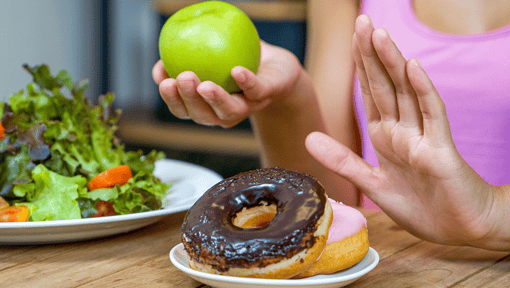
Taking control of your junk food cravings
Luckily, you don't have to rely on sheer willpower to resist your cravings for these kinds of junk food. You can employ nuts-and-bolts strategies to curb them or to satisfy them in healthy ways.
1. Ride out the urge to eat
Research suggests that “riding out” a junk food craving may actually work better than trying to fight or ignore it. In fact, some behavior experts believe that fighting food urges—or trying not to think about them—may actually make the urges stronger and longer-lasting.
So how does “riding out the urge to eat” work? In short, it is this: When a junk food craving hits, you don’t act on it. Nor do you try to control it, fight it, ignore it, or distract yourself from it. You accept the craving and the unpleasant feelings that come with it. And you simply feel it, or ride it, as it builds—similar to how a surfer rides a wave that eventually peters out. The reason this method works is because junk food cravings don't tend to last forever. They often rise, crest, and then disappear—just like waves.
2. Get moving
When a junk food craving hits, head out for a brisk walk, take a run, or join a cardio class instead of going to the kitchen. Engaging in even short bursts of exercise can release feel-good brain chemicals and may help curb cravings for junk food. In fact, some studies have found that moderate-to-vigorous exercise can dampen cravings for high-fat, high-calorie foods (e.g., junk food).
Researchers are still trying to understand the mechanism, but exercise has been shown to dampen the sense of reward normally experienced by eating junk food. Working out also decreases the hormone that triggers hunger and boosts the hormone that makes you feel full and satisfied. This helps to nip junk food cravings in the bud.
3. Find healthy ways to ease heightened emotions
Feeling stressed, sad, or angry can trigger cravings for “comfort food” (AKA, junk food). The short-term boost in dopamine you get from indulging in that bowl of ice cream, piece of pizza, or bag of chips can lead to the false expectation that the food will ease whatever stress, anger, or sadness you may be feeling. Unfortunately, comfort foods trick your brain into thinking they will make you feel better. But research suggests junk food is likely to make you feel worse. The upset emotions typically remain once the little surge of dopamine wears off, and then these feelings are exacerbated by guilt and regret for overeating the wrong foods.
Explore healthier ways to comfort yourself when intense emotions arise. Try talking with a friend or therapist. Get more exercise. Or try deep breathing exercises or meditation to comfort yourself.
4. Mind your sleep
Findings suggest that a lack of sleep can boost levels of the gut hormone that boosts hunger. Too little sleep also causes cravings for foods high in fat, salt, and sugar (again, junk food). If you're having trouble getting to sleep and/or staying asleep, talk with your doctor to get to the bottom of your insomnia. Discover simple steps you can take to repay your sleep debt.
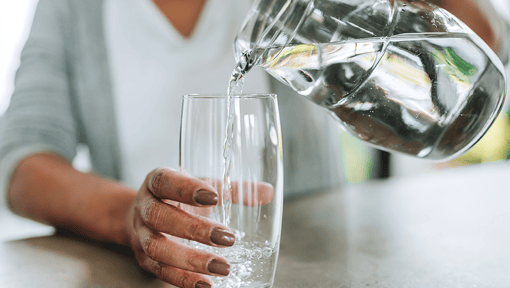
5. Hydrate
Sometimes hunger or food cravings are actually thirst in disguise. So, make sure you’re drinking plenty of water and other fluids. This can help prevent junk food cravings and support your overall health. Just make sure not to hydrate with soda or other sugary, ultra-processed drinks. Choose plain or sparkling water. You could improve the taste by infusing your water with fresh mint, citrus slices, a splash of fresh fruit juice, or even a piece of ginger. Before you know it, you’ll have formed a healthier hydration habit that will help keep junk food cravings at bay.
6. Do indulge in your favorite junk foods now and then
It’s important to allow yourself the occasional junk food treat. If you follow a highly restrictive diet all the time, you may end up feeling hungry and deprived. Junk food cravings are likely to be more frequent and harder to fight. Eat a balanced and healthy diet. But, one day a week, though no more, indulge in a small dish of ice cream or a small serving of fries or another favorite junk food.
7. Use this 3-step formula to turn your junk food habit into a healthy habit
Chances are, like many, you’re a creature of habit. You find a snack food you like or a parking spot that works, and you tend to return to it. The more you do it, the more likely it is to become an ingrained habit.
Once a habit starts to stick, it takes less thought and effort to keep it up. In time, you might even find you engage in it without really thinking about it. That’s not a bad thing with habits like that healthy bedtime routine or no-soda rule, which may have been hard-earned and are worth keeping. But it’s much less of a good thing if the habit is to eat junk food.
Research behind the science of habit suggests it boils down to 3 basic steps. Author and journalist Charles Duhigg helps untangle these findings in his book, The Power of Habit: Why We Do What We Do in Life and Business.
Duhigg explains that all habits are formed, and ingrained, due to the repetition of this 3-step process. Here’s an example:
-
-
Cue: Your body signals you that you’re hungry.
-
Routine: You eat a meal you really enjoy—maybe a cheeseburger and fries.
-
Reward: The reward pathway in your brain gets a little jolt of feel-good dopamine.
-
You repeat. But what causes you to repeat this loop over and over? Craving. After just a few cycles, your brain starts to crave the reward. It anticipates it. This craving fuels the repetition of the 3-step loop and cements the habit ever more deeply.
Soon, you go on autopilot when hunger strikes and hit the drive-through for that burger and fries without really even thinking about it. That meal becomes the path of least resistance that you’re most likely to keep following. In other words, it becomes a deeply ingrained, automatic habit.
Fortunately, you can replace a bad habit with a new, healthier habit, using the same 3-step process. You just have to make one small change to it. The cue and reward stay the same, but you change the routine. Here’s how you might do this to replace the burger-and-fries habit described above:
-
-
Cue: You feel hungry.
-
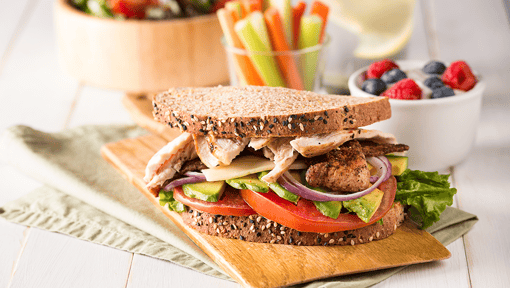
Routine: You eat a tasty grilled chicken sandwich on whole grain bread instead of a cheeseburger and fries.
-
Reward: You enjoy the new taste and texture of this healthy alternative. You notice how good it feels to try something healthier, yet just as tasty. You mentally pat yourself on the back. Your brain gets a little boost of feel-good dopamine.
-
You repeat. Soon, your brain starts to crave the reward from eating the grilled chicken sandwich instead of the old meal of a burger and fries. This new craving is what keeps you repeating the updated 3-step habit loop. And that, in turn, helps vanquish the old habit and establish your new, healthier one.
Try out this 3-step process by swapping out a few of your favorite junk foods with healthier, yet still enjoyable foods. Next time you crave a candy bar, try some dried apricots, dates, or a small piece of dark chocolate. If a craving for potato chips hits, swap those for some unbuttered air-popped popcorn instead. The next time you crave soda, flavor some bubbly water with a splash of your favorite juice. Rinse and repeat. Soon, you may find you’ve replaced your old, ingrained junk food habits with much healthier, equally ingrained eating habits.
Final thoughts
Now that you’re armed with these 7 highly effective tools for quelling your junk food cravings, make a commitment to try them out. You don’t have to employ all of them at once. Experiment with 1 or 2 of these tools at a time. Keep at it. If one tool doesn’t help, try another one. Before long, you may find that you’ve conquered your junk food cravings…or at least found the means to resist them. Your health, mood, energy, and waistline will thank you.
Learn to spot the 5 common signs your food plan may need a tune-up.

Thanks for reading this article!
Ready to take your next step toward an active and fit lifestyle?
The Active&Fit Direct™ program (offered through sponsoring organizations and employers) can get you moving! Learn more and check your eligibility.
If you are a Medicare, Medicaid, Medicare Advantage, or Dual Special Needs Plan (DSNP) enrollee, your health plan may provide a subsidized fitness program. Be sure to discuss program availability and eligibility requirements with your health plan.
The information in this and other Active&Fit® blog articles is not intended to take the place of regular medical care or advice. Please check with your doctor before using this information or beginning any fitness or self-care program. Images used for this article do not depict any members of the Active&Fit Direct program.
References
American Society for Nutrition. (2023, May 15). Using the Nova classification system to identify and estimate intake of ultraprocessed foods. https://nutrition.org/using-the-nova-classification-system-to-identify-and-estimate-intake-of-ultraprocessed-foods/
Beaulieu, K., Oustric, P., & Finlayson, G. (2020). The impact of physical activity on food reward: Review and conceptual synthesis of evidence from observational, acute, and chronic exercise training studies. Current Obesity Reports, 9(2), 63–80. https://doi.org/10.1007/s13679-020-00372-3
Berridge, K. C. (2007, April). The debate over dopamine’s role in reward: The case for incentive salience. Psychopharmacology, 191(3), 391-431. https://doi.org/10.1007/s00213-006-0578-x
Bonaccio, M., Di Castelnuovo, A., Ruggiero, E., Costanzo, S., Grosso, G., De Curtis, A., Cerletti, C., Donati, M. B., de Gaetano, G., Iacoviello, L., & Moli-sani Study Investigators (2022). Joint association of food nutritional profile by Nutri-Score front-of-pack label and ultra-processed food intake with mortality: Moli-sani prospective cohort study. BMJ (Clinical research ed.), 378, e070688. https://doi.org/10.1136/bmj-2022-070688
Duhigg, C. (2014). The Power of Habit: Why We Do What We Do in Life and Business. Random House Trade Paperbacks
Ejtahed, H.-S., Mardi, P., Hejrani, B., Mahdavi, F. S., Ghoreshi, B., Gohari, K., Heidari Beni, M., & Qorbani, M. (2024). Association between junk food consumption and mental health problems in adults: A systematic review and meta-analysis. BMC Psychiatry, 24(1), Article 438. https://doi.org/10.1186/s12888-024-05889-8
Ersche, K. D., Lim, T.-V., Ward, L. H. E., Robbins, T. W., Stochl, J. (2017, October 1). Creature of habit: A self-report measure of habitual routines and automatic tendencies in everyday life. Personality and Individual Differences, 116, 73-85. https://doi.org/10.1016/j.paid.2017.04.024
Fogg, B. J. (2020). Tiny habits. Houghton Mifflin Harcourt Publications.
Fuhrman, J. (2018). The hidden dangers of fast and processed food. American Journal of Lifestyle Medicine, 12(5), 375–381. https://doi.org/10.1177/1559827618766483
Hall, K. D., Ayuketah, A., Brychta, R., Cai, H., Cassimatis, T., Chen, K. Y., Chung, S. T., Costa, E., Courville, A., Darcey, V., Fletcher, L. A., Forde, C. G., Gharib, A. M., Guo, J., Howard, R., Joseph, P. V., McGehee, S., Ouwerkerk, R., Raisinger, K., Rozga, I., & Zhou, M. (2019). Ultra-processed diets cause excess calorie intake and weight gain: An inpatient randomized controlled trial of ad libitum food intake. Cell Metabolism, 30(1), 67–77.e3. https://doi.org/10.1016/j.cmet.2019.05.008
Hazell, T. J., Islam, H., Townsend, L. K., Schmale, M. S., & Copeland, J. L. (2016). Effects of exercise intensity on plasma concentrations of appetite-regulating hormones: Potential mechanisms. Appetite, 98, 80-88. https://doi.org/10.1016/j.appet.2015.12.016
Hedrih, V. (2025, June 8). Eating junk food linked to higher risk of depression, study finds. The Center for Nutritional Psychology. https://www.nutritional-psychology.org/eating-junk-food-linked-to-higher-risk-of-depression-study-finds/
Lane, M. M., Gamage, E., Du, S., Ashtree, D. N., McGuinness, A. J., Gauci, S., Baker, P., Lawrence, M., Rebholz, C. M., Srour, B., Touvier, M., Jacka, F. N., O’Neil, A., Segasby, T., & Marx, W. (2024). Ultra-processed food exposure and adverse health outcomes: Umbrella review of epidemiological meta-analyses. BMJ, 384, e077310. https://doi.org/10.1136/bmj-2023-077310
Martínez Steele, E., Baraldi, L. G., Louzada, M. L., Moubarac, J. C., Mozaffarian, D., & Monteiro, C. A. (2016). Ultra-processed foods and added sugars in the US diet: Evidence from a nationally representative cross-sectional study. BMJ Open, 6(3), e009892. https://doi.org/10.1136/bmjopen-2015-009892
Smith, M., Robinson, L., Segal, J. & Segal, R. (2026, February 3). Emotional eating and how to stop it. http://www.helpguide.org/articles/diet-weight-loss/emotional-eating.htm
Spence, C. (2017). Comfort food: A review. International Journal of Gastronomy and Food Science, 9, 105-109. https://doi.org/10.1016/j.ijgfs.2017.07.001
Suni, E. (2020). Sleep and overeating. https://www.sleepfoundation.org/articles/connection-between-sleep-and-overeating#
Thornton, S. N. (2016). Increased hydration can be associated with weight loss. Frontiers in Nutrition, 3, 18. https://doi.org/10.3389/fnut.2016.00018
University of Oklahoma. (2024, May 1). Riding the wave: The practice of urge surfing. https://students.ouhsc.edu/news/articles/riding-the-wave-the-practice-of-urge-surfing#
Wood, W., & Rünger, D. (2016). Psychology of habit. Annual Review of Psychology, 67, 289–314. https://doi.org/10.1146/annurev-psych-122414-033417
Wolfson, J. A., Tucker, A. C., Leung, C. W., Rebholz, C. M., Garcia-Larsen, V., & Martinez-Steele, E. (2025). Trends in adults' intake of un-processed/minimally processed, and ultra-processed foods at home and away from home in the United States from 2003-2018. The Journal of Nutrition, 155(1), 280–292. https://doi.org/10.1016/j.tjnut.2024.10.048
This article was written by Gail Olson, edited by Jason Nielsen, and clinically reviewed by Elizabeth Thompson, MPH, RDN, on April 2, 2026.

